50 Animal Names in English With Pictures, Sounds and Pronunciation
Pets, farm animals, wild animals, birds and sea creatures: 50 animal names with IPA pronunciation, the sound each one makes, and the plural rules that catch learners out.
PipWords: AI Word Camera
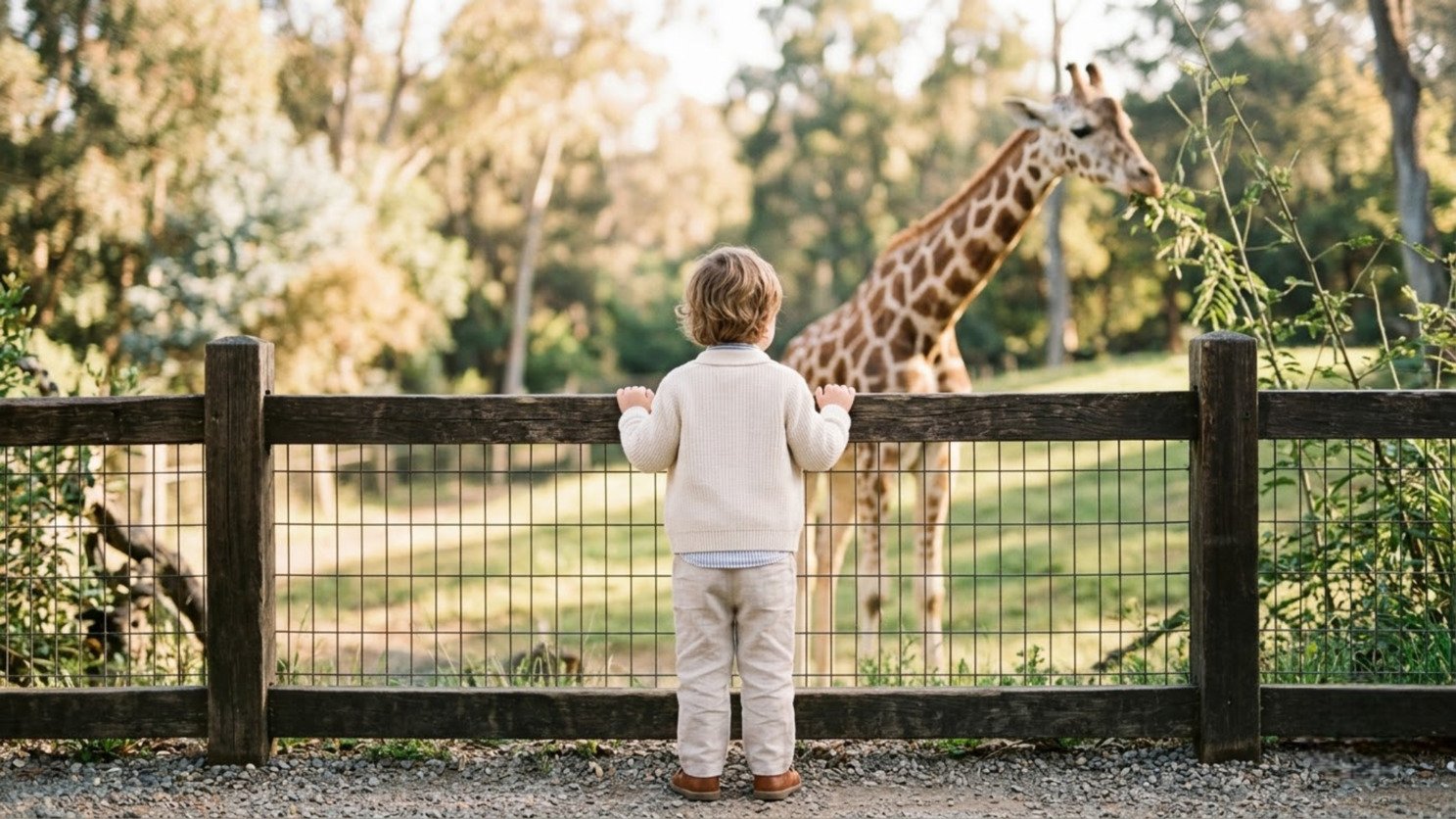
🌟 Animal names in English
The 50 most useful animal names in English are the pets children meet at home (dog, cat, rabbit), the farm animals in every picture book (cow, horse, sheep, chicken), the wild animals from the zoo (lion, tiger, elephant, monkey), common birds (owl, eagle, penguin, peacock) and sea creatures (shark, whale, dolphin, octopus). All 50 are listed below with pronunciation.
Animals are the easiest vocabulary group to teach a child, for one reason: children already care about them. A word attached to something a child finds exciting is remembered after one or two meetings, while a word from a list needs five. That is why almost every English course starts here.
What’s in this guide
- 10 pet animals
- 10 farm animals
- 10 wild animals
- 10 birds
- 10 sea animals and small creatures
- Animal sounds in English
- Irregular plurals and baby-animal names
- How to teach these 50 words
🐶 Pet animals in English (10 words)
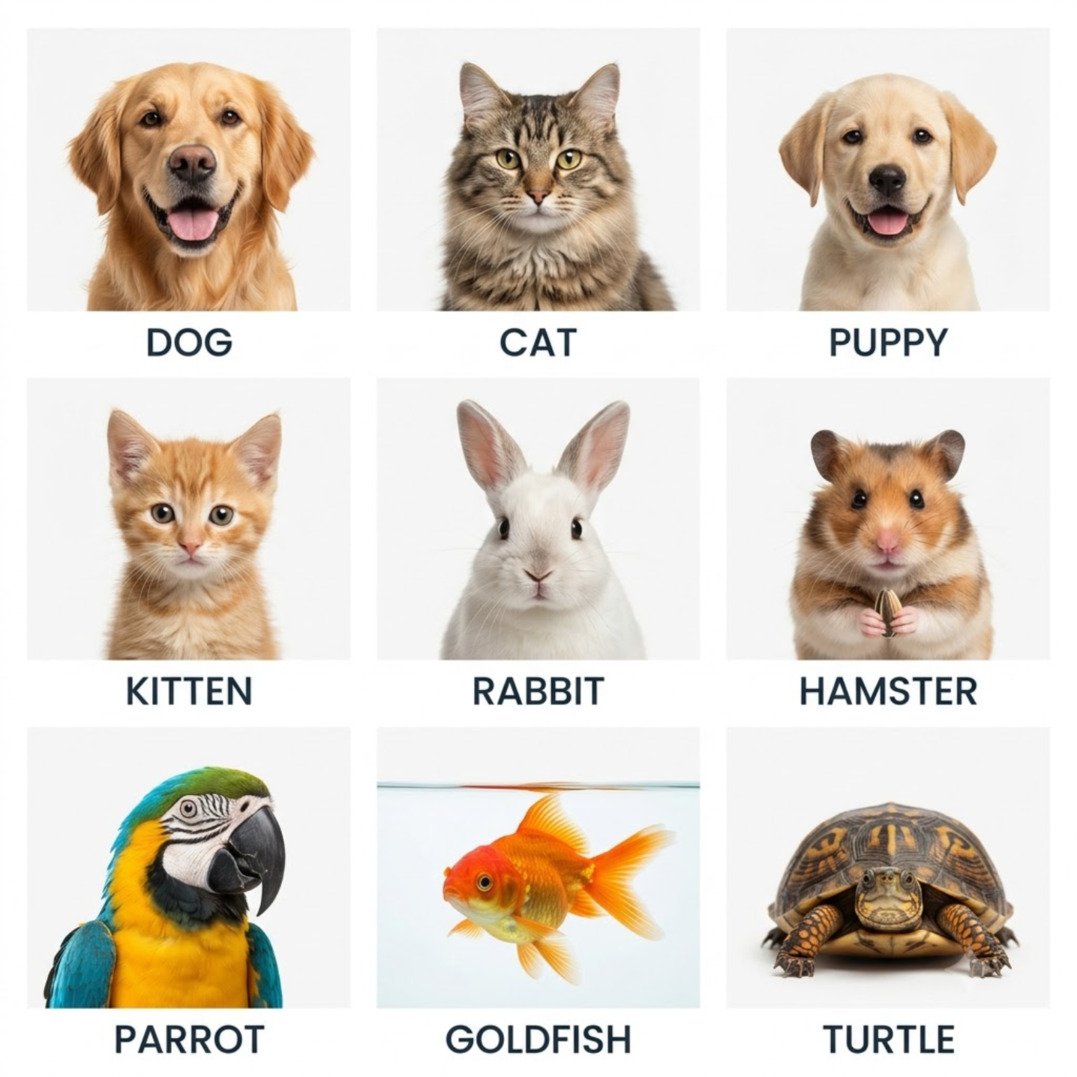
| Animal | IPA | Example sentence |
|---|---|---|
| dog | /dɔːɡ/ | My dog sleeps under the table. |
| cat | /kæt/ | The cat is on the chair. |
| puppy | /ˈpʌpi/ | A puppy is a baby dog. |
| kitten | /ˈkɪtn/ | The kitten is very small. |
| rabbit | /ˈræbɪt/ | The rabbit eats carrots. |
| hamster | /ˈhæmstər/ | My hamster runs in a wheel. |
| parrot | /ˈpærət/ | The parrot can say my name. |
| goldfish | /ˈɡoʊldfɪʃ/ | We have two goldfish. |
| turtle | /ˈtɜːrtl/ | The turtle walks slowly. |
| guinea pig | /ˈɡɪni pɪɡ/ | Her guinea pig is brown and white. |
🐄 Farm animals in English (10 words)
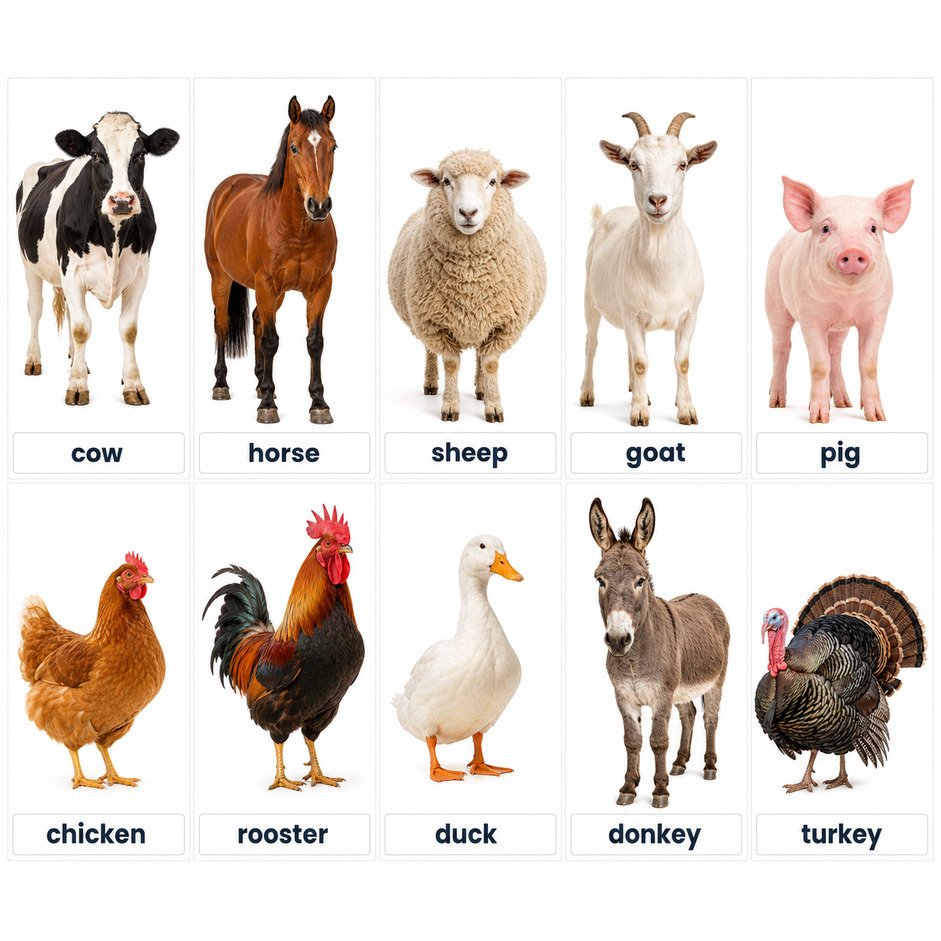
| Animal | IPA | Example sentence |
|---|---|---|
| cow | /kaʊ/ | The cow gives us milk. |
| horse | /hɔːrs/ | A horse can run very fast. |
| sheep | /ʃiːp/ | The sheep are in the field. |
| goat | /ɡoʊt/ | The goat is eating grass. |
| pig | /pɪɡ/ | The pig is pink and fat. |
| chicken | /ˈtʃɪkɪn/ | The chicken lays eggs. |
| rooster | /ˈruːstər/ | The rooster wakes us up. |
| duck | /dʌk/ | The duck swims on the pond. |
| donkey | /ˈdɑːŋki/ | The donkey carries the bags. |
| turkey | /ˈtɜːrki/ | The turkey is a big bird. |
🦁 Wild animals in English (10 words)
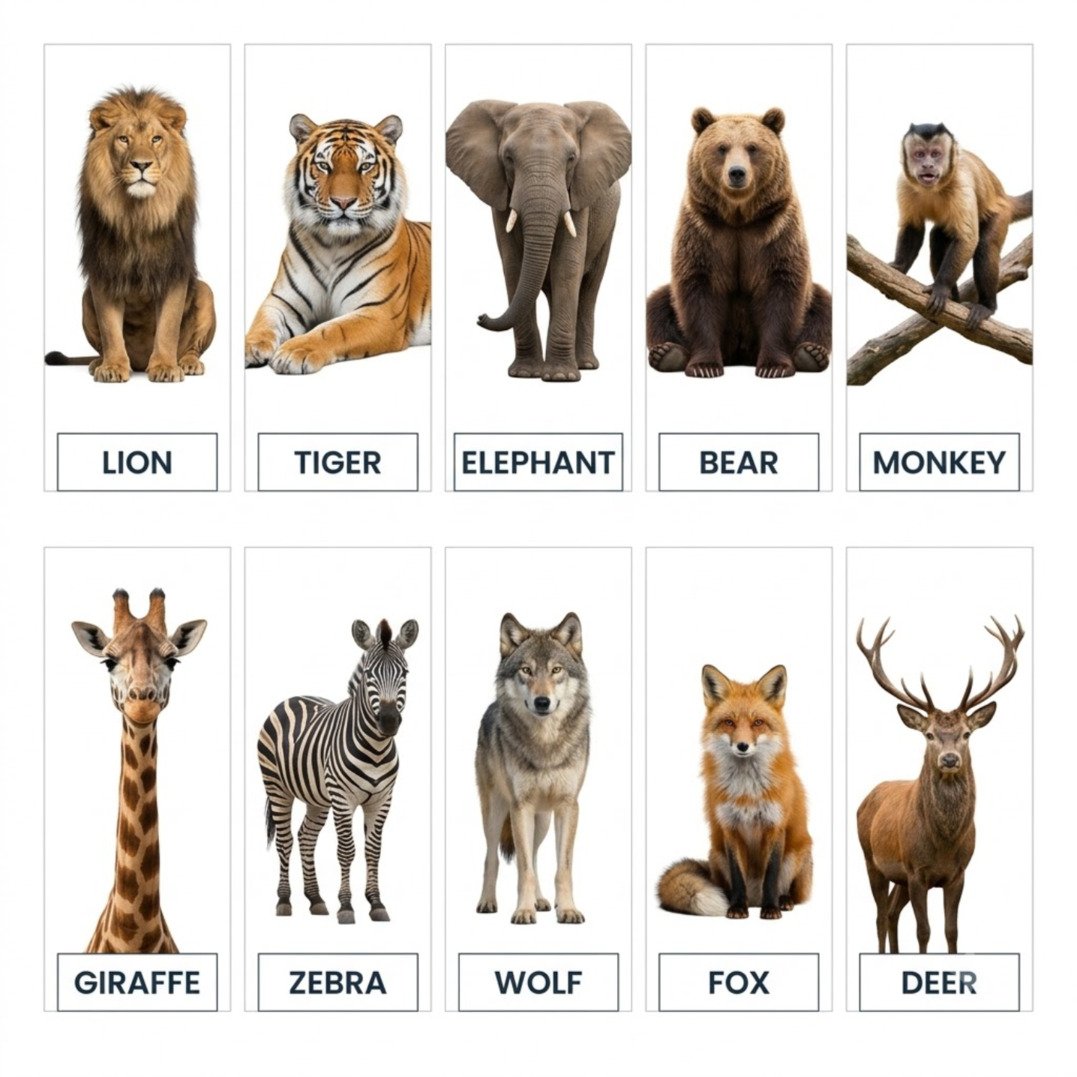
| Animal | IPA | Example sentence |
|---|---|---|
| lion | /ˈlaɪən/ | The lion is the king of the animals. |
| tiger | /ˈtaɪɡər/ | A tiger has orange and black stripes. |
| elephant | /ˈelɪfənt/ | The elephant has a long trunk. |
| bear | /ber/ | The bear sleeps all winter. |
| monkey | /ˈmʌŋki/ | The monkey climbs the tree. |
| giraffe | /dʒəˈræf/ | A giraffe has a very long neck. |
| zebra | /ˈziːbrə/ | The zebra is black and white. |
| wolf | /wʊlf/ | The wolf lives in the forest. |
| fox | /fɑːks/ | A fox has a big tail. |
| deer | /dɪr/ | We saw a deer near the road. |
🦅 Birds and sea animals (20 words)
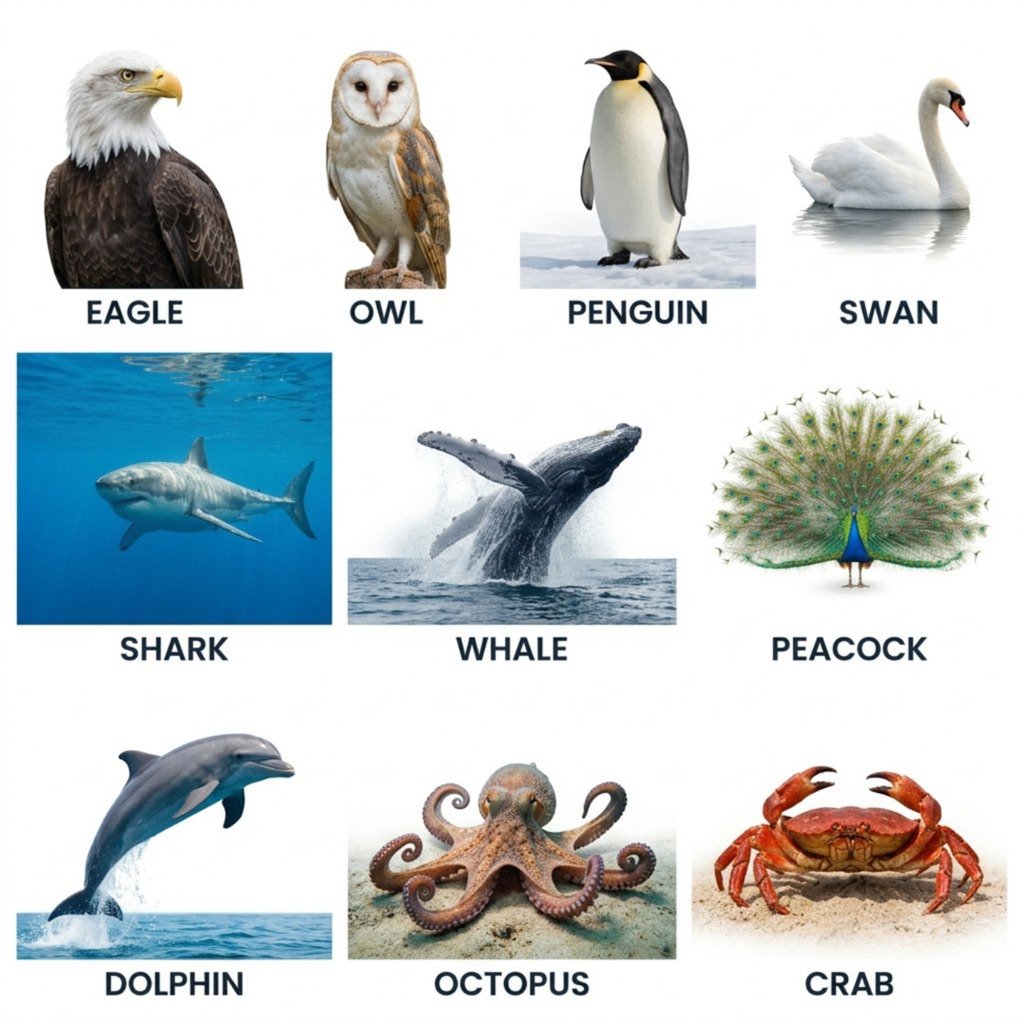
| Bird | IPA | Sea & small animal | IPA |
|---|---|---|---|
| bird | /bɜːrd/ | fish | /fɪʃ/ |
| eagle | /ˈiːɡl/ | shark | /ʃɑːrk/ |
| owl | /aʊl/ | whale | /weɪl/ |
| penguin | /ˈpeŋɡwɪn/ | dolphin | /ˈdɑːlfɪn/ |
| swan | /swɑːn/ | octopus | /ˈɑːktəpəs/ |
| pigeon | /ˈpɪdʒɪn/ | crab | /kræb/ |
| crow | /kroʊ/ | frog | /frɑːɡ/ |
| peacock | /ˈpiːkɑːk/ | snake | /sneɪk/ |
| flamingo | /fləˈmɪŋɡoʊ/ | butterfly | /ˈbʌtərflaɪ/ |
| sparrow | /ˈspæroʊ/ | bee | /biː/ |
🔊 Animal sounds in English
Animal sounds are different in every language: a dog says woof in English but guau in Spanish and هاو in Arabic. Children find this hilarious, which makes it one of the fastest ways to get a reluctant learner talking.
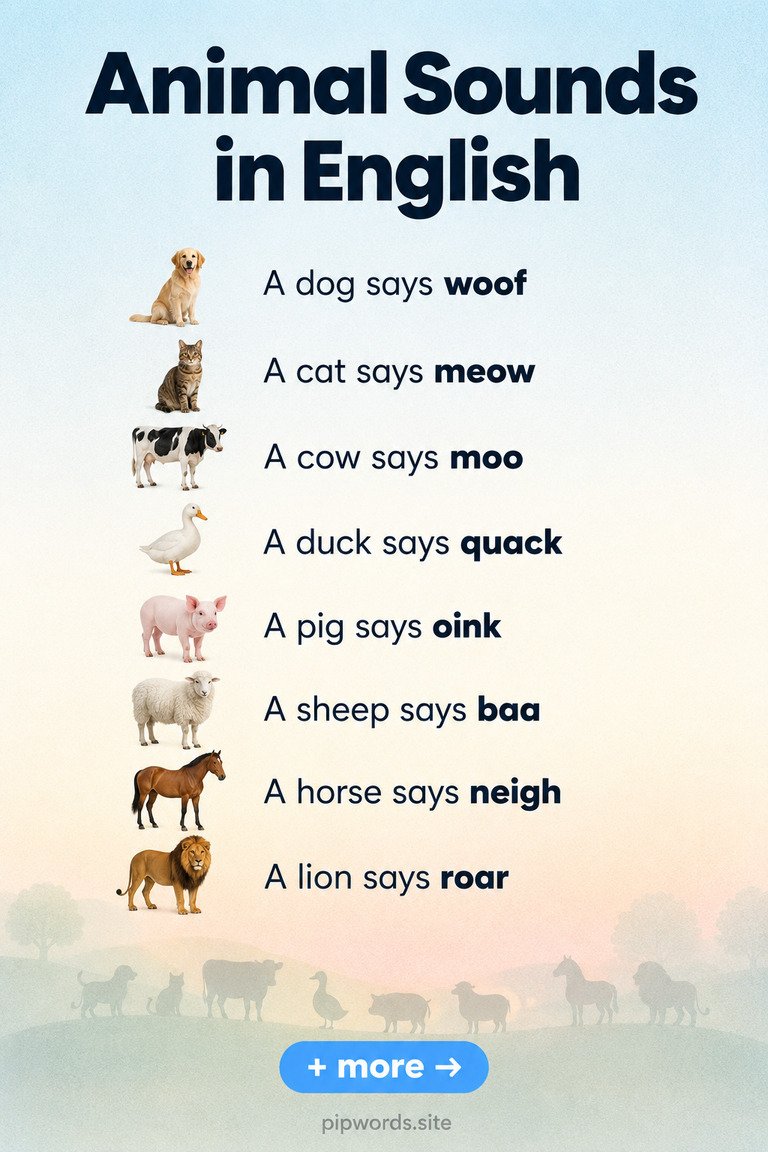
| Animal | Sound (noun) | Verb |
|---|---|---|
| dog | woof / bow-wow | bark |
| cat | meow | meow, purr |
| cow | moo | moo |
| sheep | baa | bleat |
| pig | oink | grunt |
| horse | neigh | neigh |
| duck | quack | quack |
| chicken | cluck | cluck |
| rooster | cock-a-doodle-doo | crow |
| bird | tweet | sing, chirp |
| lion | roar | roar |
| bee | buzz | buzz |
| frog | ribbit | croak |
| snake | hiss | hiss |
| owl | hoot | hoot |
📝 Plurals and baby animals
Most animals simply add -s (one dog, two dogs). These are the exceptions worth learning at the same time as the word itself:
| Singular | Plural | Baby animal |
|---|---|---|
| sheep | sheep (no change) | lamb |
| deer | deer (no change) | fawn |
| fish | fish (usually no change) | – |
| mouse | mice | – |
| goose | geese | gosling |
| wolf | wolves | cub |
| dog | dogs | puppy |
| cat | cats | kitten |
| cow | cows | calf |
| horse | horses | foal |
| duck | ducks | duckling |
| chicken | chickens | chick |
⚡ How to teach these 50 animal words
- Start with the animals your child can actually see: a pet, a bird outside the window, a toy dinosaur. Real beats printed every time.
- Teach the sound with the name. “Dog: woof!” is two words for the price of one, and children repeat sounds without being asked.
- Five animals a day, one group at a time. Pets on Monday, farm on Tuesday. Mixing groups makes similar words interfere with each other.
- Ask the next day, do not re-show. Point at the picture and ask “what is this?”, then wait. That pause is where the memory forms. See why kids forget English words.
- Use a zoo trip or a picture book as the test. Naming animals in the wild is far more motivating than naming them on a page.
📱 Catch real animals instead of pictures
A list teaches an animal your child has never met. PipWords lets them point the camera at their own cat, the neighbour’s dog, a toy elephant or a duck at the park, and in about 2 seconds it becomes a word card with a cut-out photo of that exact animal, the English word, IPA, audio and a translation in one of 17 languages.
Then the app remembers which animals are due for review and brings them back inside games and boss challenges. Free on iPhone and Android, no ads.
More word lists: 100 first English words · 40 kitchen words · the 7-day word hunt plan
❓ FAQ: animal names in English
Q: What are the most common animal names in English?
A: Dog, cat, bird, fish, cow, horse, sheep, chicken, lion, elephant and monkey appear most often in everyday English and children’s books. Start with pets, then farm animals, then wild animals.
Q: Which animal plurals are irregular in English?
A: Sheep, deer and fish usually do not change (one sheep, five sheep). Mouse becomes mice, goose becomes geese, and wolf becomes wolves. Everything else on this list simply adds -s.
Q: What sound does a dog make in English?
A: A dog says “woof” or “bow-wow”, and the verb is “bark”. A cat says “meow”, a cow says “moo”, a duck says “quack” and a rooster says “cock-a-doodle-doo”.
Q: How do you pronounce “giraffe” and “zebra”?
A: Giraffe is /dʒəˈræf/ with the stress on the second syllable. Zebra is /ˈziːbrə/ in American English and /ˈzebrə/ in British English: both are correct.
Q: What are baby animals called in English?
A: A baby dog is a puppy, a baby cat is a kitten, a baby cow is a calf, a baby sheep is a lamb, a baby horse is a foal, a baby duck is a duckling and a baby chicken is a chick.
Q: How many animal names should a child learn first?
A: Ten is plenty to start: the pets and farm animals they already recognise. Add five a day from one group, and review the previous day’s words before adding new ones.
Q: Is there a printable animal names list?
A: Yes. Print this page or screenshot the picture grids above. Have your child tick each animal only once they name it correctly on a later day than the day they learned it.
🧑💻 About the Author
PipWords: the AI word camera
Written by the maker of PipWords, an independent studio run by a parent-developer. IPA transcriptions are General American, with British variants noted where a learner would notice the difference. PipWords runs on iPhone and Android in 12 interface languages with translations in 17, with no ads and no data selling.
An animal we should add? support@pipwords.site