The First 100 English Words for Kids (With Pronunciation)
The 100 words worth learning before any others: grouped by topic, with IPA pronunciation, in the order that makes them easiest to remember.
PipWords: AI Word Camera
🌟 Which English words should a child learn first?
A child’s first English words should be the things they can touch and the actions they do every day: family, body, home, food, clothes, animals, school and ten simple verbs. The 100 words below cover exactly that, in ten groups of ten.
Most beginner lists start with colours, numbers and zoo animals. That is a mistake: a child rarely needs “giraffe” at home, but needs “spoon”, “shoes” and “open” several times a day. Words that appear in real life get used, and words that get used are the ones that stay. Everything below was chosen on that test.
Learn them at five a day and the whole list takes about three weeks, including review days. If you want the routine that goes with it, follow the 7-day word hunt plan; for how big a vocabulary should eventually be, see how many English words a child should know.
📝 The first 100 words list (print this)
All 100 words on one screen. Print this list and tick each word your child can say; the tables below give the pronunciation of every word.
People and body (1 to 20): mother, father, sister, brother, baby, friend, boy, girl, man, woman, head, hair, eye, ear, nose, mouth, hand, foot, leg, tooth.
Home and kitchen (21 to 40): house, door, window, table, chair, bed, lamp, key, clock, floor, cup, spoon, fork, knife, plate, bowl, pot, pan, fridge, sink.
Clothes and food (41 to 60): shirt, pants, dress, shoes, socks, hat, coat, jacket, glasses, bag, bread, milk, egg, rice, apple, banana, water, cheese, meat, cake.
Animals and outside (61 to 80): dog, cat, bird, fish, horse, cow, duck, rabbit, bear, elephant, tree, flower, sun, moon, rain, car, bus, bike, road, sky.
School and ten verbs (81 to 100): book, pen, pencil, paper, desk, teacher, school, ruler, scissors, glue, eat, drink, sleep, run, walk, play, read, write, open, wash.
👨👩👧 Words 1–20: people and body
Start here. A child can point at every one of these without leaving the room, which is why they are the easiest twenty words in English to learn.
| Family & people | IPA | Body | IPA |
|---|---|---|---|
| mother | /ˈmʌðər/ | head | /hed/ |
| father | /ˈfɑːðər/ | hair | /her/ |
| sister | /ˈsɪstər/ | eye | /aɪ/ |
| brother | /ˈbrʌðər/ | ear | /ɪr/ |
| baby | /ˈbeɪbi/ | nose | /noʊz/ |
| friend | /frend/ | mouth | /maʊθ/ |
| boy | /bɔɪ/ | hand | /hænd/ |
| girl | /ɡɜːrl/ | foot | /fʊt/ |
| man | /mæn/ | leg | /leɡ/ |
| woman | /ˈwʊmən/ | tooth | /tuːθ/ |
Three irregular plurals live in this group and are worth teaching immediately, because children meet them constantly: foot → feet, tooth → teeth, man → men, woman → women (said “WIM-in”). Note also that woman and women differ in the first vowel, not the last.
🏠 Words 21–40: home and kitchen
| Around the house | IPA | Kitchen | IPA |
|---|---|---|---|
| house | /haʊs/ | cup | /kʌp/ |
| door | /dɔːr/ | spoon | /spuːn/ |
| window | /ˈwɪndoʊ/ | fork | /fɔːrk/ |
| table | /ˈteɪbl/ | knife | /naɪf/ |
| chair | /tʃer/ | plate | /pleɪt/ |
| bed | /bed/ | bowl | /boʊl/ |
| lamp | /læmp/ | pot | /pɑːt/ |
| key | /kiː/ | pan | /pæn/ |
| clock | /klɑːk/ | fridge | /frɪdʒ/ |
| floor | /flɔːr/ | sink | /sɪŋk/ |
The k in “knife” is silent (/naɪf/), and the plural is irregular: knives. If your child enjoys this group, the full kitchen has another thirty words waiting in 40 English kitchen words with IPA.
👕 Words 41–60: clothes and food
| Clothes | IPA | Food & drink | IPA |
|---|---|---|---|
| shirt | /ʃɜːrt/ | bread | /bred/ |
| pants | /pænts/ | milk | /mɪlk/ |
| dress | /dres/ | egg | /eɡ/ |
| shoes | /ʃuːz/ | rice | /raɪs/ |
| socks | /sɑːks/ | apple | /ˈæpl/ |
| hat | /hæt/ | banana | /bəˈnænə/ |
| coat | /koʊt/ | water | /ˈwɔːtər/ |
| jacket | /ˈdʒækɪt/ | cheese | /tʃiːz/ |
| glasses | /ˈɡlæsɪz/ | meat | /miːt/ |
| bag | /bæɡ/ | cake | /keɪk/ |
British English says trousers where American English says pants: both are understood, but in Britain “pants” means underwear, which children find extremely funny and therefore remember instantly. Note that shoes, socks, pants and glasses are almost always plural.
🐶 Words 61–80: animals and outside
| Animals | IPA | Outside | IPA |
|---|---|---|---|
| dog | /dɔːɡ/ | tree | /triː/ |
| cat | /kæt/ | flower | /ˈflaʊər/ |
| bird | /bɜːrd/ | sun | /sʌn/ |
| fish | /fɪʃ/ | moon | /muːn/ |
| horse | /hɔːrs/ | rain | /reɪn/ |
| cow | /kaʊ/ | car | /kɑːr/ |
| duck | /dʌk/ | bus | /bʌs/ |
| rabbit | /ˈræbɪt/ | bike | /baɪk/ |
| bear | /ber/ | road | /roʊd/ |
| elephant | /ˈelɪfənt/ | sky | /skaɪ/ |
Watch out for fish, which is usually the same in the plural (one fish, ten fish). This is also the group where a toy or a pet does the teaching for you: a child who owns a toy rabbit learns “rabbit” in one attempt.
✏️ Words 81–100: school and ten verbs
| School | IPA | Verbs | IPA |
|---|---|---|---|
| book | /bʊk/ | eat | /iːt/ |
| pen | /pen/ | drink | /drɪŋk/ |
| pencil | /ˈpensl/ | sleep | /sliːp/ |
| paper | /ˈpeɪpər/ | run | /rʌn/ |
| desk | /desk/ | walk | /wɔːk/ |
| teacher | /ˈtiːtʃər/ | play | /pleɪ/ |
| school | /skuːl/ | read | /riːd/ |
| ruler | /ˈruːlər/ | write | /raɪt/ |
| scissors | /ˈsɪzərz/ | open | /ˈoʊpən/ |
| glue | /ɡluː/ | wash | /wɑːʃ/ |
These ten verbs are the most valuable words on the entire list. Nouns name the world, but verbs let a child say something, and pairing each verb with a noun they already know (“eat the apple”, “open the door”, “wash your hands”) turns 100 separate words into hundreds of sentences. In write and scissors the first letters are silent: /raɪt/ and /ˈsɪzərz/.
⚡ How to teach these 100 words (three weeks, three minutes a day)
Reading a list teaches nothing on its own. Four steps that work, and a printable trick at the end:
- Take five words a day, from one group only. Mixing groups causes interference; five related words in one room is the sweet spot.
- Touch the real object while saying the word, twice. If the object is not in the house (elephant, bus) use a toy, a picture book or a window.
- Start the next day by asking, not showing. “What is this called?”, then wait a few seconds before helping. That pause is where learning happens.
- Add a verb by the end of each week. “Open the door”, “wash your hands”: a used word is worth several reviews.
Free printable checklist: you do not need a download. Print this page, or screenshot the five tables above, and let your child tick each word once they have said it correctly on a different day from the day they learned it. The tick means “remembered”, not “met”: that single rule is what separates a real checklist from a wish list.
📱 Turn your own home into the word list
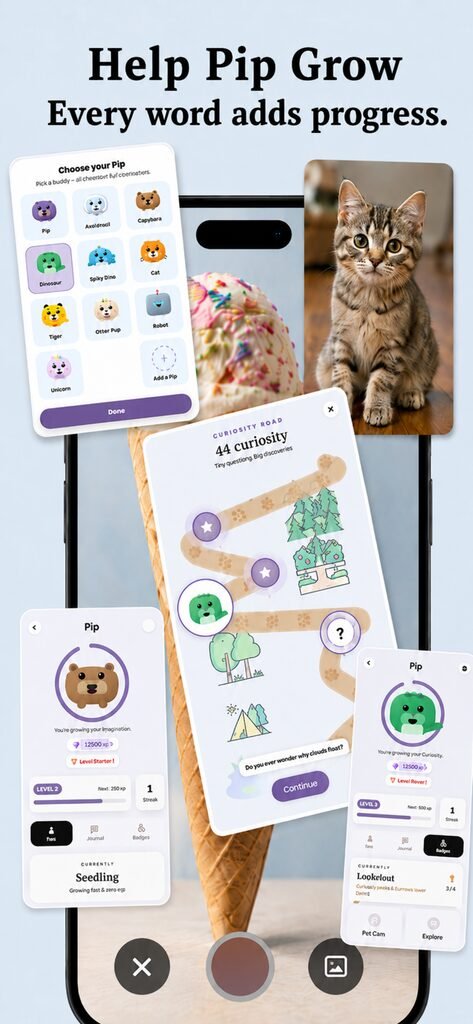
A printed list is someone else’s hundred words. PipWords lets your child build their own: point the camera at the actual chair, the actual dog, and in about 2 seconds it becomes a card with a cut-out photo of that exact thing, the English word, IPA, audio and a translation in one of 17 languages. Because the picture is their chair, the word has something to stick to.
The app then does the part that kills most checklists: it remembers which of the 100 words are due for review today and brings them back inside games and boss challenges rather than tests. Free on iPhone and Android, no ads.
Conclusion
One hundred words is not a small thing: it is enough to name most of a house, describe a meal, and ask for what you want. Take them five at a time, always from one group, always with the real object in hand, and always asking rather than telling on the second day. Three weeks from now your child will own the vocabulary that most textbooks spend a year circling.
Next: 40 kitchen words in depth · why children forget words · the best English apps for kids compared
❓ FAQ: first English words for children
Q: What English words should a child learn first?
A: Words for things they can touch and actions they do daily: family, body parts, home and kitchen objects, clothes, food, animals, school items, and ten simple verbs. The 100 words above cover all of these.
Q: How long does it take to learn 100 English words?
A: About three weeks at five words a day, including review days. Faster is possible but rarely sticks; five a day with a review of yesterday retains far better than twenty in one sitting.
Q: Should I start with colours and numbers?
A: Not first. Colours and numbers are abstract and cannot be pointed at, so they are harder than concrete objects. Teach them after the first hundred nouns, when a child can attach them to things they already know.
Q: Do I need to teach IPA to my child?
A: No. The IPA in this list is for the adult, so you can check a pronunciation before saying it. Children learn sound by hearing and copying, not by reading symbols.
Q: Which English words are hardest to pronounce for beginners?
A: On this list, the silent letters trip everyone: knife /naɪf/, write /raɪt/, scissors /ˈsɪzərz/. The “th” in mother, father, mouth and tooth is the other common difficulty and is worth practising slowly.
Q: Is there a free printable for these words?
A: Yes. Print this page or screenshot the tables. Have your child tick each word only when they recall it correctly on a later day than the day they learned it, so the checklist measures memory rather than exposure.
Q: What comes after the first 100 words?
A: Go deeper into one room at a time rather than wider across new topics. The kitchen alone holds another forty useful words, and depth in a familiar place beats a scattering of rare nouns.
Q: My child understands these words but will not say them. Is that normal?
A: Completely normal. Understanding always runs ahead of speaking. Ask questions that need a one-word answer rather than requesting sentences, and let the silent period pass without pressure.
🧑💻 About the Author
PipWords: the AI word camera
Written by the maker of PipWords, an independent studio run by a parent-developer. These 100 words follow the object categories built into the app, chosen because they appear in a child’s daily life rather than because they look impressive on a list. IPA transcriptions are General American, with British variants noted where a learner would actually notice the difference.
A word you think belongs in the first hundred? support@pipwords.site