40 Fruits and Vegetables Names in English With Pictures
20 fruits and 20 vegetables with IPA pronunciation and example sentences — plus the US/UK name differences and the one grammar rule that catches every learner out.
PipWords: AI Word Camera
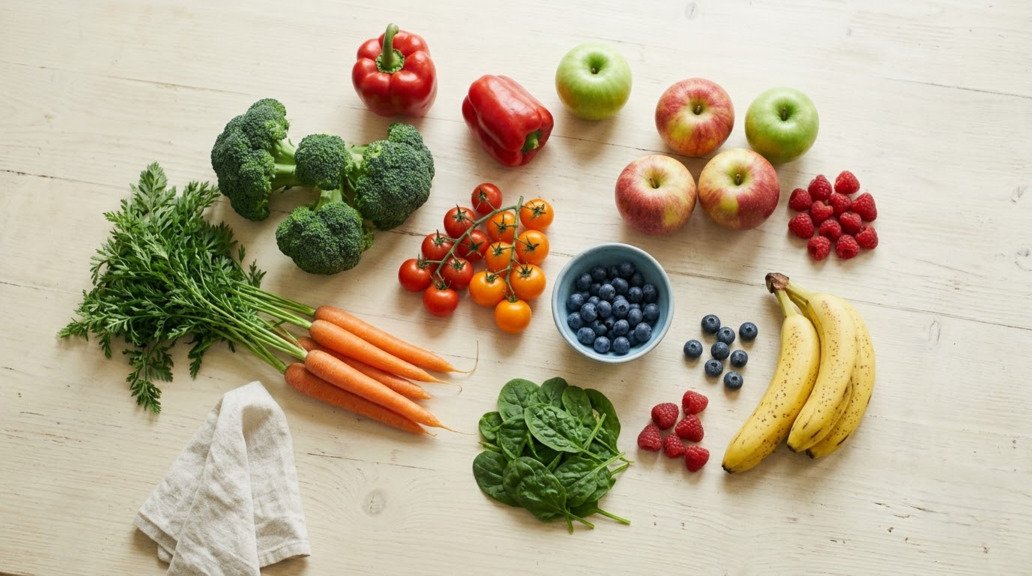
🌟 Fruits and vegetables in English
The 40 most useful fruits and vegetables in English are the ones on a normal shopping list: apple, banana, orange, grape, strawberry, mango, lemon and watermelon among the fruits; carrot, potato, tomato, onion, garlic, cucumber, pepper and broccoli among the vegetables. All 40 are listed below with pronunciation and example sentences.
This is the single best vocabulary group for beginners, for a practical reason: every word on the list is sitting in a kitchen or a market within walking distance. A child can hold the actual apple while saying “apple”, which is worth more than any flashcard — and unlike zoo animals, these words get used at dinner every single day.
What’s in this guide
- 20 fruit names with pronunciation
- 20 vegetable names with pronunciation
- US and UK names that differ
- Countable or uncountable? The rule learners get wrong
- Sentences to use at the table today
- How to teach all 40 in two weeks
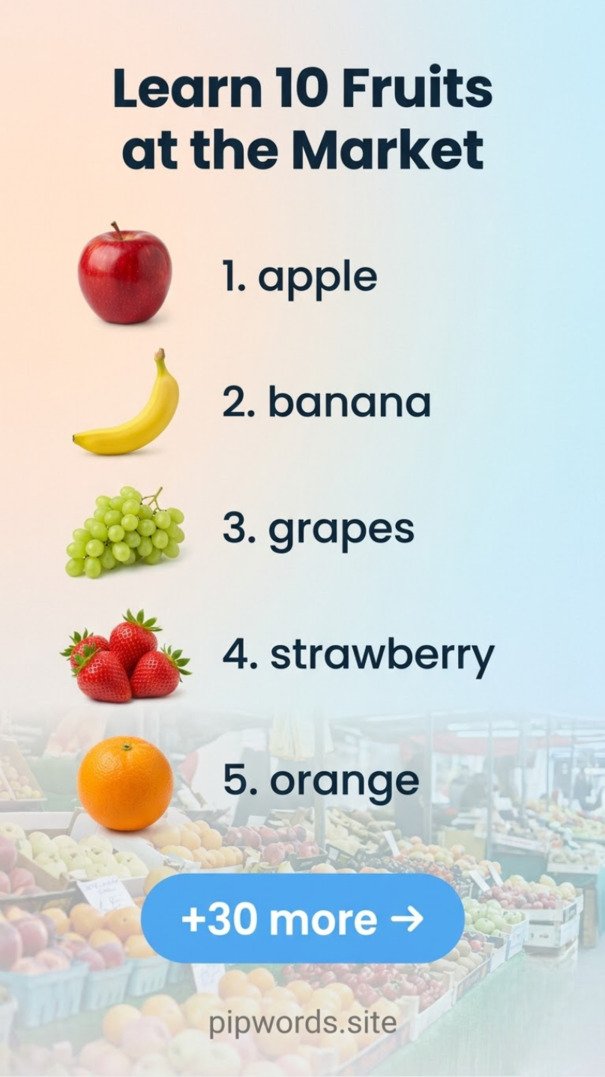
🍎 20 fruits names in English
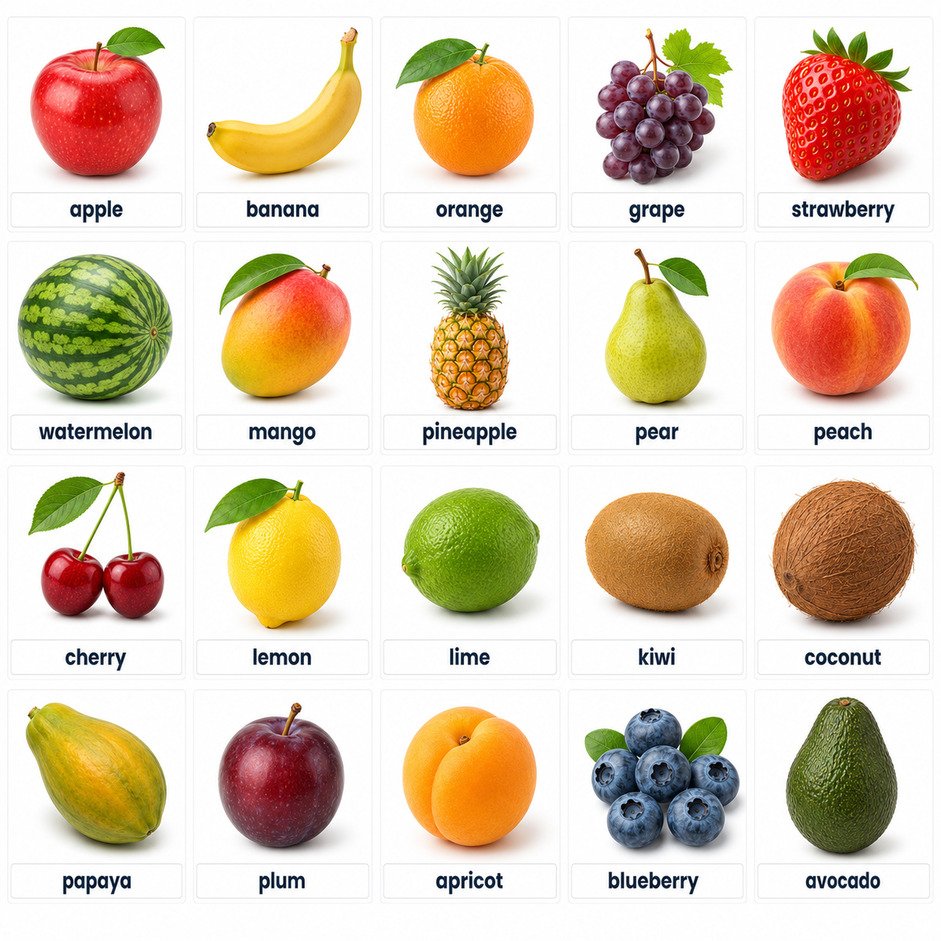
| Fruit | IPA | Example sentence |
|---|---|---|
| apple | /ˈæpl/ | I eat an apple every morning. |
| banana | /bəˈnænə/ | The banana is yellow. |
| orange | /ˈɔːrɪndʒ/ | Oranges are full of vitamin C. |
| grape | /ɡreɪp/ | We bought green grapes. |
| strawberry | /ˈstrɔːberi/ | She likes strawberries with cream. |
| watermelon | /ˈwɔːtərmelən/ | Watermelon is perfect in summer. |
| mango | /ˈmæŋɡoʊ/ | This mango is very sweet. |
| pineapple | /ˈpaɪnæpl/ | A pineapple has a spiky skin. |
| pear | /per/ | The pear is soft and juicy. |
| peach | /piːtʃ/ | Peaches grow in summer. |
| cherry | /ˈtʃeri/ | There is a cherry on the cake. |
| lemon | /ˈlemən/ | Lemons are sour. |
| lime | /laɪm/ | Add some lime to the water. |
| kiwi | /ˈkiːwiː/ | A kiwi is green inside. |
| coconut | /ˈkoʊkənʌt/ | Coconut milk is white. |
| papaya | /pəˈpaɪə/ | Papaya is orange inside. |
| plum | /plʌm/ | The plum is dark purple. |
| apricot | /ˈæprɪkɑːt/ | Apricots are small and orange. |
| blueberry | /ˈbluːberi/ | Blueberries are tiny and blue. |
| avocado | /ˌævəˈkɑːdoʊ/ | Avocado is good on toast. |
Pronunciation traps here: orange has two syllables, not three (/ˈɔːrɪndʒ/), and the last sound is the same as in “jam”. Avocado is stressed on the third syllable: a-vo-CA-do.
🥕 20 vegetables names in English
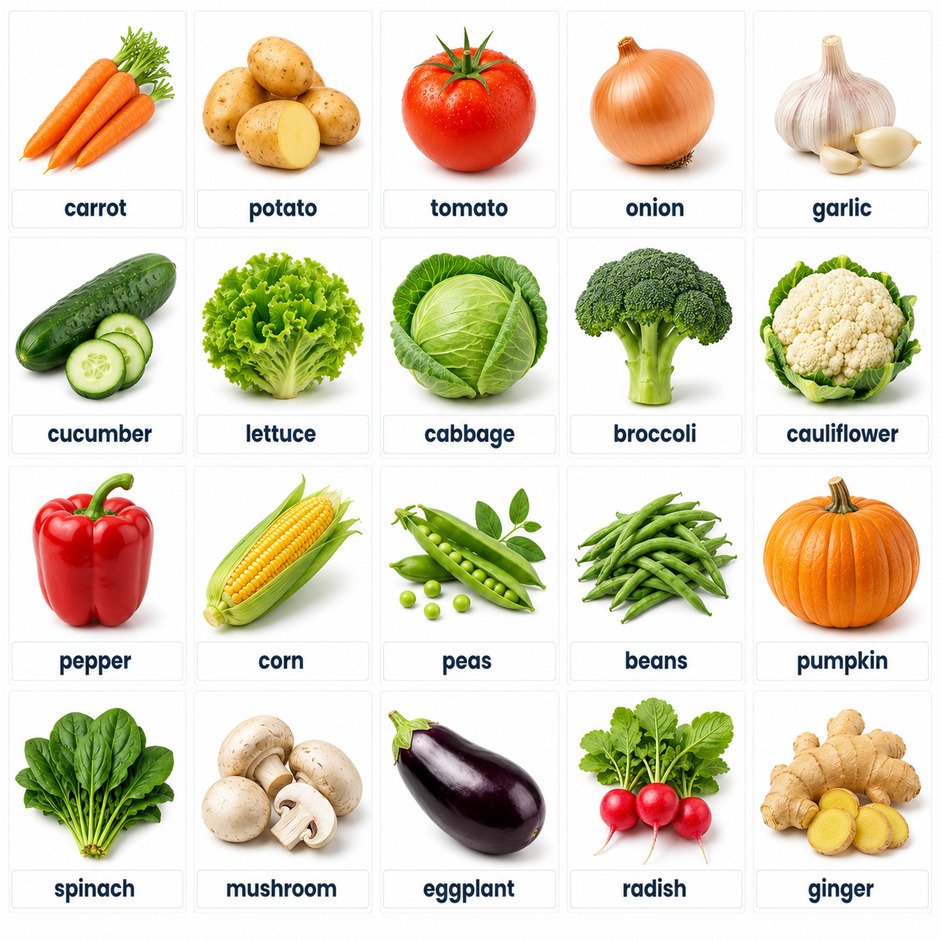
| Vegetable | IPA | Example sentence |
|---|---|---|
| carrot | /ˈkærət/ | Rabbits love carrots. |
| potato | /pəˈteɪtoʊ/ | We are having potatoes for dinner. |
| tomato | /təˈmeɪtoʊ/ | The tomato is red and round. |
| onion | /ˈʌnjən/ | Onions make me cry. |
| garlic | /ˈɡɑːrlɪk/ | Add garlic to the soup. |
| cucumber | /ˈkjuːkʌmbər/ | Cucumber is cool and fresh. |
| lettuce | /ˈletɪs/ | Wash the lettuce for the salad. |
| cabbage | /ˈkæbɪdʒ/ | Cabbage has many green leaves. |
| broccoli | /ˈbrɑːkəli/ | Broccoli looks like a little tree. |
| cauliflower | /ˈkɔːliflaʊər/ | Cauliflower is white. |
| pepper | /ˈpepər/ | The red pepper is sweet. |
| corn | /kɔːrn/ | We eat corn in summer. |
| peas | /piːz/ | Peas are small and green. |
| beans | /biːnz/ | Beans are good for you. |
| pumpkin | /ˈpʌmpkɪn/ | The pumpkin is big and orange. |
| spinach | /ˈspɪnɪtʃ/ | Spinach makes you strong. |
| mushroom | /ˈmʌʃruːm/ | Mushrooms grow in the forest. |
| eggplant | /ˈeɡplænt/ | The eggplant is dark purple. |
| radish | /ˈrædɪʃ/ | Radishes taste a little spicy. |
| ginger | /ˈdʒɪndʒər/ | Ginger tea is good for a cold. |
Two to watch: lettuce ends in the sound “-iss”, not “-oose” (/ˈletɪs/), and tomato is /təˈmeɪtoʊ/ in American English but /təˈmɑːtoʊ/ in British English — the famous difference in the song.
🇺🇸🇬🇧 Same vegetable, different name
This trips up learners in shops and recipes more than any pronunciation problem. Both words are correct — learn the one used where you live, and recognise the other.
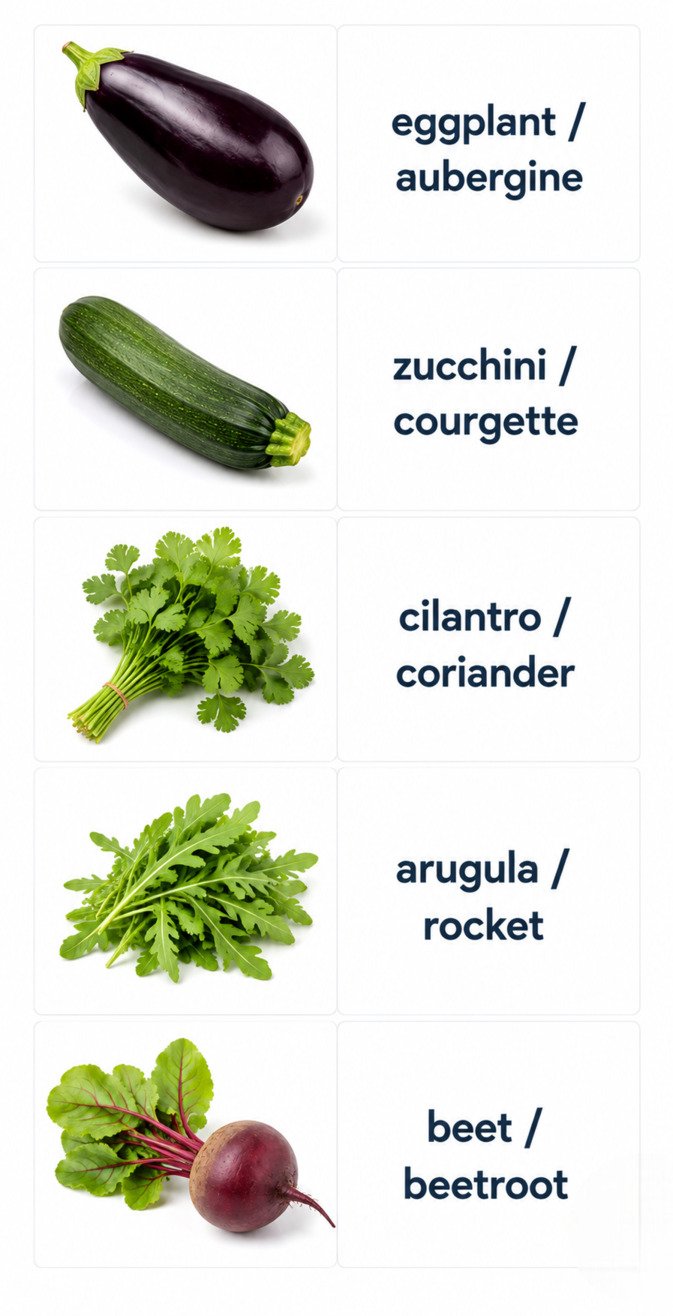
| American English | British English |
|---|---|
| eggplant | aubergine |
| zucchini | courgette |
| cilantro | coriander |
| arugula | rocket |
| beet | beetroot |
| scallion / green onion | spring onion |
| chickpeas | chickpeas / garbanzo beans |
📝 “A carrot” or “some spinach”? The countable rule
Most fruits and vegetables are countable: you can say an apple, two apples, three carrots. A few are uncountable — you cannot put a number in front of them, so you use “some” or a container word instead.
| Countable ✅ | Uncountable ⚠️ |
|---|---|
| an apple / two apples | some spinach (not “a spinach”) |
| a carrot / five carrots | some lettuce |
| a tomato / three tomatoes | some corn |
| a banana / six bananas | some garlic (or “a clove of garlic”) |
| a mushroom / ten mushrooms | some broccoli (or “a head of broccoli”) |
Also note the spelling of plurals: potato → potatoes and tomato → tomatoes take -es, while cherry → cherries and strawberry → strawberries change the y to -ies.
🍽️ Ten sentences to use at the table tonight
A word used once at dinner is worth several silent reviews. Try these:
- Can you pass me the tomato, please?
- Do you want an apple or a banana?
- This lemon is very sour!
- I don’t like onions.
- Let’s buy some strawberries.
- The watermelon is too big for the fridge.
- Please wash the lettuce.
- How many carrots do we need?
- My favourite fruit is mango.
- Eat your broccoli, please.
⚡ How to teach all 40 in two weeks
- Empty the fruit bowl onto the table. Five items, said out loud while holding each one. That is day one, and it takes three minutes.
- Do the fridge on day two, then the cupboard, then the shopping bags. New territory each day keeps it interesting without changing the routine.
- Take the list to the supermarket. Give your child five words to find and let them point. Real shopping beats any worksheet.
- Cook something together and name each ingredient as it goes in. Words attached to actions stay longest.
- Always start by asking yesterday’s five. Ask, do not tell — see why kids forget English words for the timing that makes them stick.
📱 Learn them from your own fridge
This is the one vocabulary group where an app genuinely beats a list: every item is already in your kitchen. Point PipWords at the actual apple on your table and in about 2 seconds you get a card with a cut-out photo of that apple, the English word, IPA, tappable audio and the translation in one of 17 languages.
The app then decides which of the 40 come back for review, and returns them inside games and boss challenges rather than tests. Free on iPhone and Android, no ads.
More word lists: 40 kitchen words · 50 animal names · 100 first English words
❓ FAQ: fruits and vegetables in English
Q: What are the most common fruits and vegetables in English?
A: Apple, banana, orange, grape, strawberry, lemon, mango and watermelon are the most common fruits; carrot, potato, tomato, onion, garlic, cucumber, pepper and broccoli are the most common vegetables.
Q: Is a tomato a fruit or a vegetable?
A: Botanically a tomato is a fruit, because it grows from a flower and contains seeds. In cooking and in everyday English it is treated as a vegetable. The same is true of cucumber, pepper, pumpkin and eggplant.
Q: How do you pronounce “vegetable”?
A: It has three syllables, not four: /ˈvedʒtəbl/ — “VEJ-tuh-bul”. The second e is not pronounced, which surprises most learners.
Q: What is the difference between eggplant and aubergine?
A: None — they are the same vegetable. Eggplant is American English, aubergine is British English. The same applies to zucchini/courgette, cilantro/coriander and arugula/rocket.
Q: Do I say “a spinach” or “some spinach”?
A: “Some spinach”. Spinach, lettuce, corn, garlic and broccoli are uncountable in English, so they take “some” rather than “a” or a number. Most other vegetables are countable: a carrot, two carrots.
Q: How do you spell the plural of potato and tomato?
A: Potatoes and tomatoes, with -es. Cherry and strawberry change the y: cherries, strawberries.
Q: How can children learn fruit and vegetable names quickly?
A: Use real food. Five items from the fruit bowl, said aloud while holding each one, then the same five asked again the next day. A trip to the supermarket where the child finds five named items works better than any worksheet.
Q: Is there a printable fruits and vegetables list?
A: Yes — print this page or screenshot the two picture grids. Have your child tick each item only when they name it correctly on a later day than the day they learned it.
🧑💻 About the Author
PipWords — the AI word camera
Written by the maker of PipWords, an independent studio run by a parent-developer. IPA transcriptions are General American, with British variants shown where the two genuinely differ. PipWords runs on iPhone and Android in 12 interface languages with translations in 17, with no ads and no data selling.
A fruit or vegetable we should add? support@pipwords.site