Colours Names in English With Pictures (16 Colors for Kids)
The 16 colours children meet first, with pictures, IPA pronunciation and everyday things of each colour, plus quick lists of 5 and 10.
PipWords: AI Word Camera
🎨 Colours names: the short answer
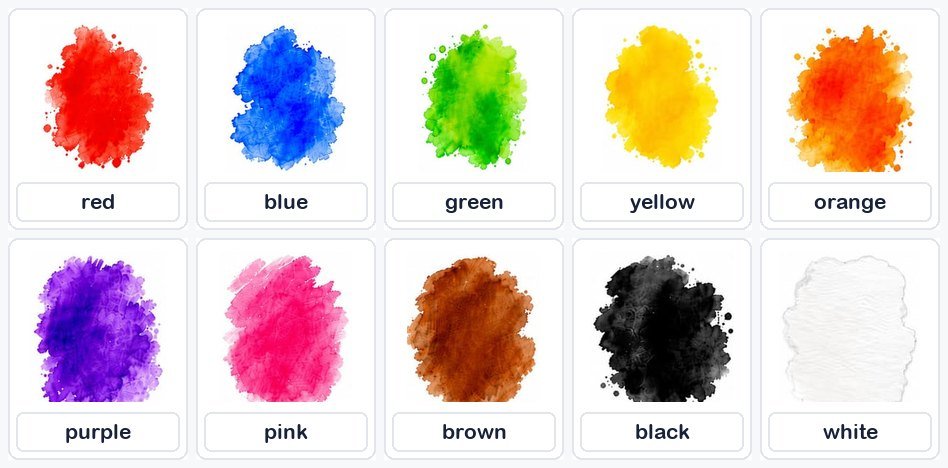
The basic colours names in English are red, blue, green, yellow, orange, purple, pink, brown, black and white. Add gray, silver, gold, violet, turquoise and beige and you have the 16 colours below, each with a picture, IPA pronunciation and three everyday things of that colour.
A note on spelling: colour is British (also used in India, Australia and most of the Commonwealth) and color is American. They are said the same way, /ˈkʌlər/, and this page uses both.
🎨 Find something red, then snap it
Colours stick best on real things: a red apple, a yellow pencil. Point PipWords at any object and get its English name, the IPA and the audio in about 2 seconds, then add the colour: a red cup. Free to download on iPhone and Android.
⚡ Quick lists: 5 and 10 colours names
10 colours names in English
10 colours: red, blue, green, yellow, orange, purple, pink, brown, black and white.
5 colours names in English
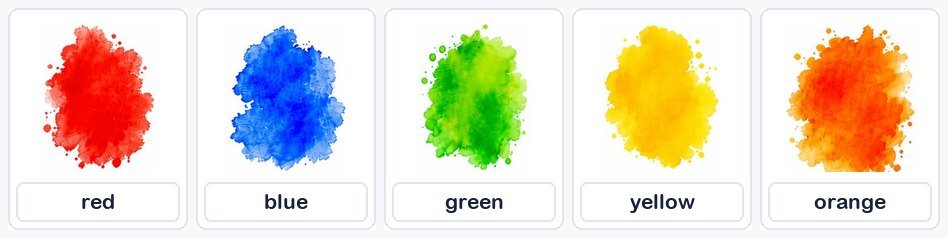
5 colours: red, blue, green, yellow and orange.
🌈 16 colours names in English with pictures
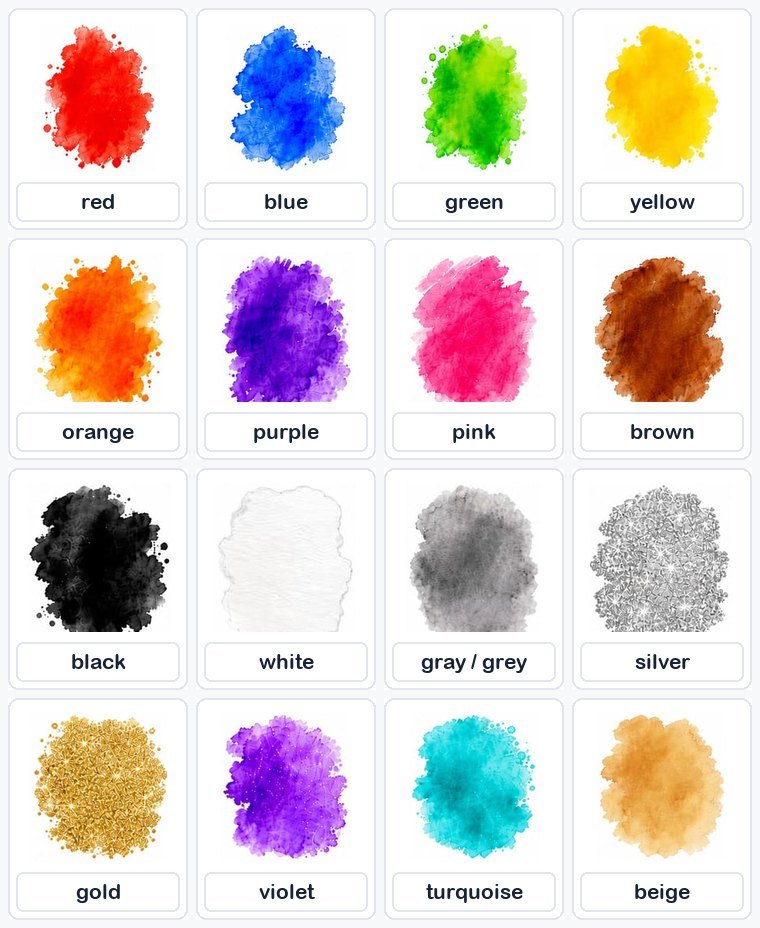
| Colour | IPA | Things this colour |
|---|---|---|
| red | /red/ | an apple, a strawberry, a fire truck |
| blue | /bluː/ | the sky, the sea, jeans |
| green | /ɡriːn/ | grass, leaves, a frog |
| yellow | /ˈjeloʊ/ | a banana, a lemon, the sun |
| orange | /ˈɔːrɪndʒ/ | an orange, a carrot, a pumpkin |
| purple | /ˈpɜːrpl/ | grapes, an eggplant (British: aubergine), lavender |
| pink | /pɪŋk/ | a flamingo, a pig, a rose |
| brown | /braʊn/ | chocolate, a tree trunk, a bear |
| black | /blæk/ | the night sky, a crow, coal |
| white | /waɪt/ | snow, milk, a cloud |
| gray / grey | /ɡreɪ/ | an elephant, a rain cloud, a mouse |
| silver | /ˈsɪlvər/ | a spoon, a coin, foil |
| gold | /ɡoʊld/ | a gold medal, a crown, a ring |
| violet | /ˈvaɪələt/ | violet flowers, the last colour of the rainbow |
| turquoise | /ˈtɜːrkwɔɪz/ | a tropical sea, a turquoise stone |
| beige | /beɪʒ/ | sand, a biscuit, a trench coat |
Pronunciation traps: beige ends in /ʒ/, the sound in the middle of “measure”. Turquoise is /ˈtɜːrkwɔɪz/: the end rhymes with “noise”. Orange has two syllables, /ˈɔːrɪndʒ/, not three.
🌈 The 7 colours of the rainbow
Red, orange, yellow, green, blue, indigo and violet. Indigo is the only one not in the list above: a deep blue between blue and violet. Many English-speaking children remember the order with the name “Roy G. Biv”, one letter per colour.
💡 Light, dark, bright and pale colours
English makes shades by putting a word before the colour. The colour word itself never changes:
- light: light blue, light green
- dark: dark blue, dark brown
- bright: bright red, bright yellow
- pale: pale pink, pale yellow
For a colour between two others, join them with a hyphen: blue-green, yellow-orange. Adding -ish makes “a bit of”: a reddish apple, a greenish sea.
📝 Using colours in sentences
- Before a noun, as an adjective: a red ball, never “a ball red”.
- After be: The ball is red.
- As a noun: Red is my favourite colour.
- The question: What colour is it? It is blue.
Fruit is an easy place to practise: a yellow banana, a green apple, a purple grape. Our fruits and vegetables list gives you 40 more things to describe.
🧠 How to learn colours at home
- Colour hunt. Say a colour and find three things of that colour in the room.
- One colour a day. Wear it, eat it, point at it, and say the word each time.
- Colour plus object. Always say both together: a red cup, a blue towel. Two words learned at once.
- Come back tomorrow. Repeat yesterday’s colour before learning a new one. Our guide on why kids forget English words explains why.
The household items list has 55 objects to practise colours on, from a blue towel to a white pillow.
📱 Hear every word, then use it
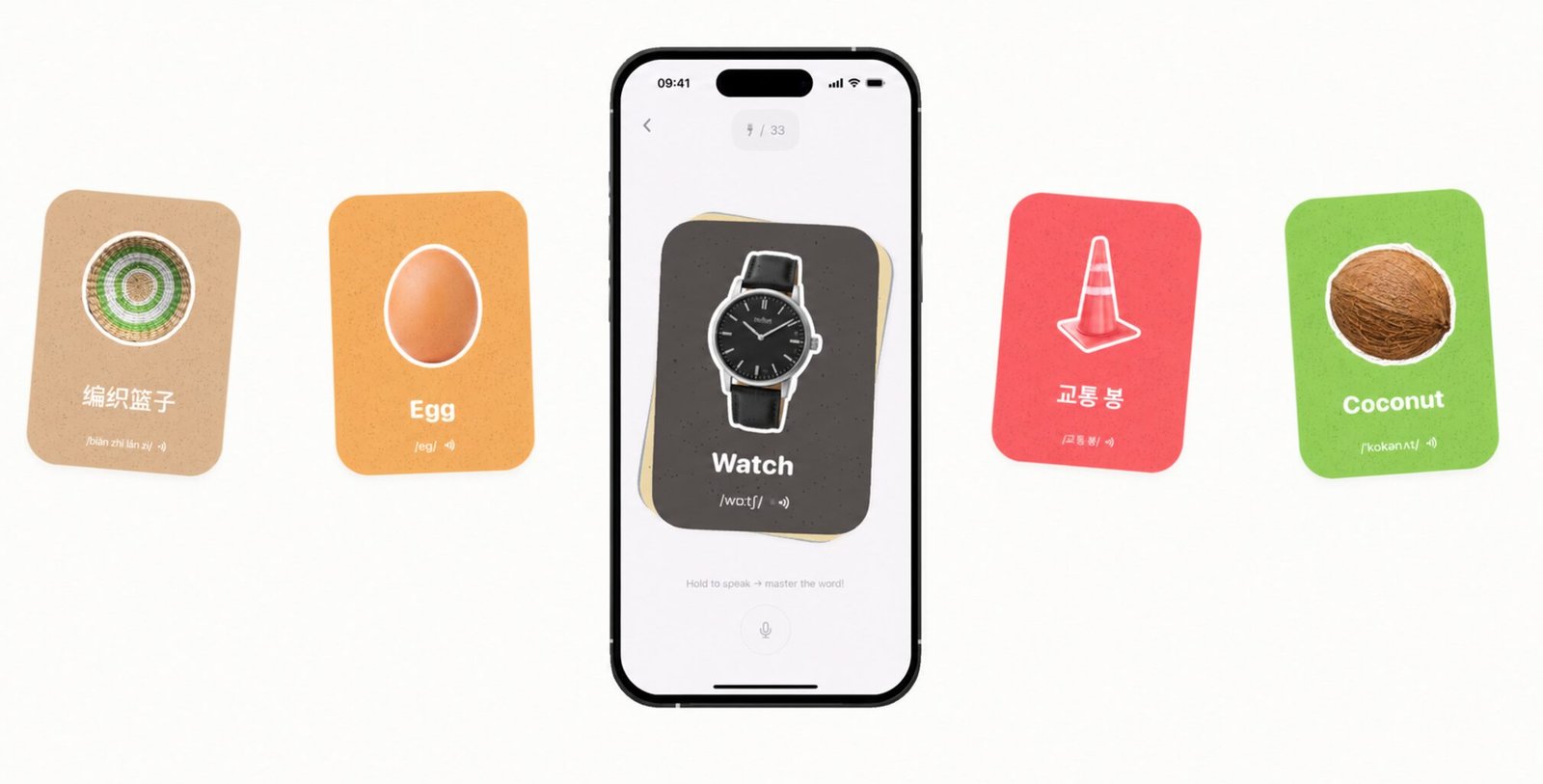
Written IPA only goes so far: most learners need to hear a word before they can say it. Point PipWords at your own cup and in about 2 seconds you get a card with a cutout photo of your cup, the word, the IPA, tappable audio and the translation in your language (17 available). Because the picture is your object rather than a stock photo, the word has something to stick to.
After that, the app brings each word back on the right day, inside mini-games and boss battles rather than tests. It is free to download on iPhone and Android, has no ads, and only the cutout is ever shared, never your photo.
Conclusion
Sixteen colours, endless things to describe. Learn the first ten, then pair each one with an object you can see right now: a white cloud, a brown table, a green leaf.
❓ FAQ: colours names in English
Q: What are the 10 basic colours in English?
A: Red, blue, green, yellow, orange, purple, pink, brown, black and white. Most children learn these ten first, then gray, silver, gold and the rest.
Q: What are the 7 colours of the rainbow?
A: Red, orange, yellow, green, blue, indigo and violet. Indigo is a deep blue between blue and violet.
Q: Is it colour or color?
A: Both are correct and they sound the same, /ˈkʌlər/. Colour is the British spelling, also used in India, Australia and most of the Commonwealth; color is American.
Q: Is it grey or gray?
A: Both are correct. Grey is British and gray is American, and both are said /ɡreɪ/.
Q: What is the difference between purple and violet?
A: Violet is a bluer shade and the last colour of the rainbow. Purple sits between red and blue. In everyday speech many people say purple for both.
Q: How do you say light and dark colours in English?
A: Put light, dark, bright or pale before the colour: light blue, dark green, bright red, pale pink. The colour word stays the same.
Q: How do you ask about colours in English?
A: Ask “What colour is it?” and answer “It is red.” To ask about a favourite, say “What is your favourite colour?”
Q: How can children learn colours names?
A: Play a colour hunt: name a colour and find three things of that colour at home. Real objects work better than flashcards because the child connects the colour to things they know.
🧑💻 About the Author
PipWords: the AI word camera
Written by the maker of PipWords, an independent studio run by a parent-developer. Word choices here follow the categories used inside the app, and IPA transcriptions are General American with British variants noted where they differ. PipWords runs on iPhone and Android in 12 interface languages with translations in 17, with no ads and no data selling.
A word we should add to this list? support@pipwords.site