Household Items Names in English: 55 Words With Pictures
Bedroom and bathroom items with labeled pictures, IPA pronunciation and a short meaning for each, plus quick lists of 5 and 10.
PipWords: AI Word Camera
🏠 Household items names: the short answer
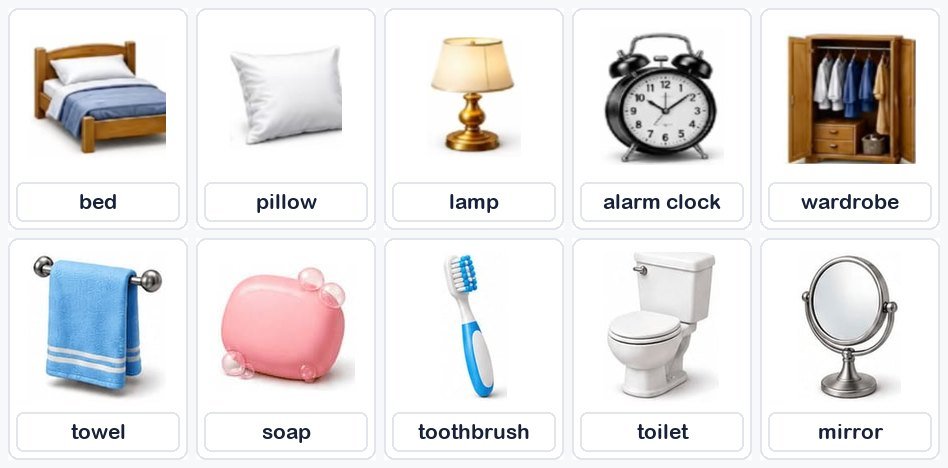
The most useful household items names in English are the things you touch every day: bed, pillow, blanket, lamp and wardrobe in the bedroom, and towel, soap, toothbrush, toilet and mirror in the bathroom. All 55 words below come with a labeled picture, IPA pronunciation and a one-line meaning.
Home is the easiest place to learn vocabulary because every object is within reach and used daily, so each word gets practice without any extra effort. This page covers the bedroom and the bathroom. The kitchen has its own list of 40 English kitchen words, and the fruits and vegetables list covers the food in it.
📸 Point your phone at your own pillow
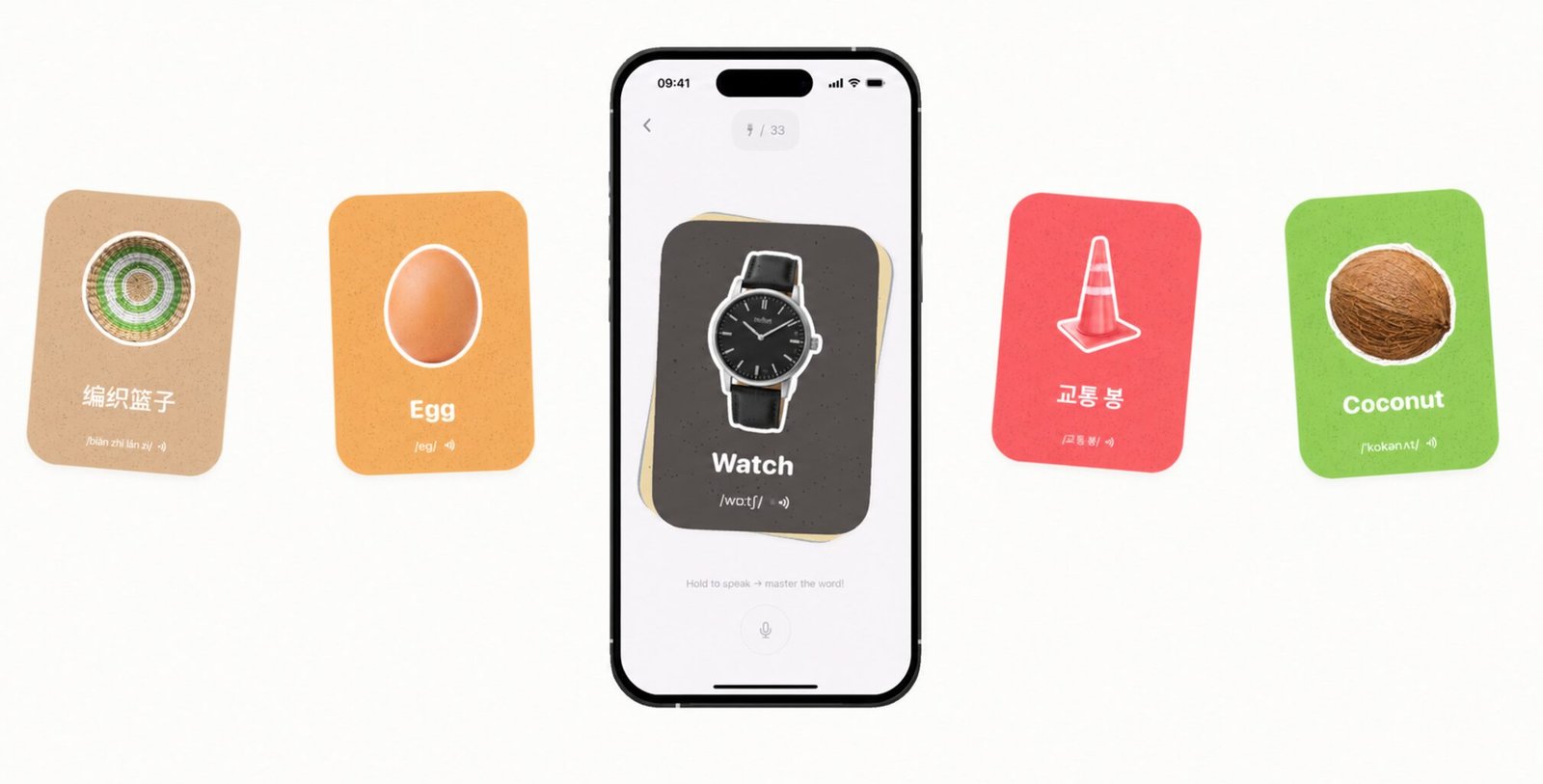
Snap any object at home and PipWords shows the English word, the IPA and the audio in about 2 seconds, with a translation in your language. Free to download on iPhone and Android.
⚡ Quick lists: 5 and 10 household items names
10 household items names in English
10 household items: bed, pillow, lamp, alarm clock, wardrobe, towel, soap, toothbrush, toilet and mirror.
5 household items names in English
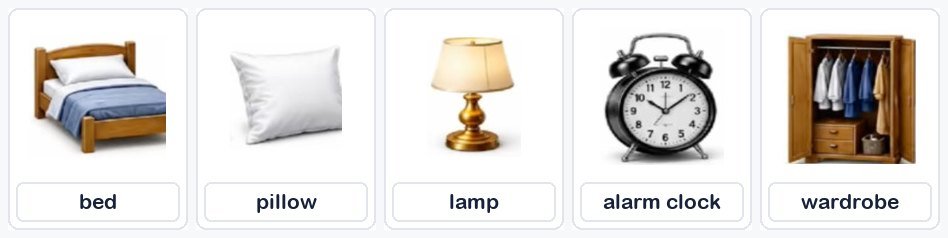
5 household items: bed, pillow, lamp, alarm clock and wardrobe.
🛏️ Bedroom items names in English (30 words)
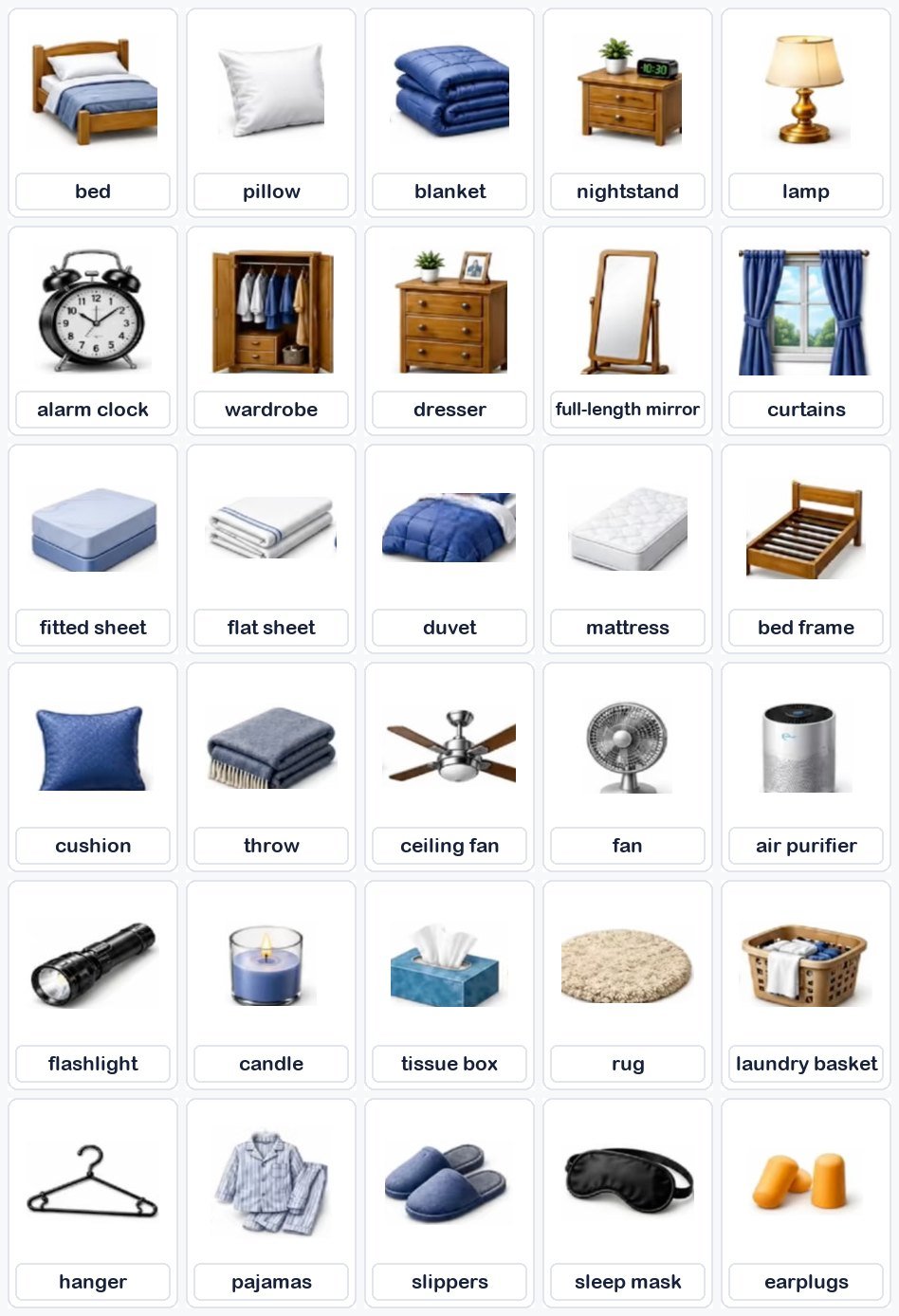
| Word | IPA | What it is |
|---|---|---|
| bed | /bed/ | You sleep on it |
| pillow | /ˈpɪloʊ/ | Soft, for your head |
| blanket | /ˈblæŋkɪt/ | Keeps you warm in bed |
| nightstand | /ˈnaɪtstænd/ | Small table next to the bed (British: bedside table) |
| lamp | /læmp/ | Gives light on a table or the floor |
| alarm clock | /əˈlɑːrm klɑːk/ | Wakes you up in the morning |
| wardrobe | /ˈwɔːrdroʊb/ | Tall cupboard for hanging clothes |
| dresser | /ˈdresər/ | Low furniture with drawers for clothes (British: chest of drawers) |
| full-length mirror | /ˌfʊl ˈleŋkθ ˈmɪrər/ | A tall mirror that shows your whole body |
| curtains | /ˈkɜːrtnz/ | Cloth that covers the window |
| fitted sheet | /ˈfɪtɪd ʃiːt/ | Sheet with elastic corners that wraps the mattress |
| flat sheet | /flæt ʃiːt/ | Thin sheet you sleep under |
| duvet | /duːˈveɪ/ | Thick, soft bed cover (American also: comforter) |
| mattress | /ˈmætrəs/ | The soft part of the bed you lie on |
| bed frame | /ˈbed freɪm/ | The wooden or metal base of a bed |
| cushion | /ˈkʊʃn/ | Small soft pillow for a chair, sofa or bed |
| throw | /θroʊ/ | Small blanket for a sofa or the end of a bed |
| ceiling fan | /ˈsiːlɪŋ fæn/ | Fan fixed to the ceiling |
| fan | /fæn/ | Moves air to keep you cool |
| air purifier | /ˈer ˌpjʊrɪfaɪər/ | Machine that cleans the air in a room |
| flashlight | /ˈflæʃlaɪt/ | Small light you carry (British: torch) |
| candle | /ˈkændl/ | Wax with a small flame |
| tissue box | /ˈtɪʃuː bɑːks/ | Box of soft paper tissues |
| rug | /rʌɡ/ | Small carpet on the floor |
| laundry basket | /ˈlɔːndri ˌbæskɪt/ | Holds clothes that need washing |
| hanger | /ˈhæŋər/ | Holds a shirt or dress in the wardrobe |
| pajamas | /pəˈdʒɑːməz/ | Clothes you sleep in (British: pyjamas) |
| slippers | /ˈslɪpərz/ | Soft shoes for inside the house |
| sleep mask | /ˈsliːp mæsk/ | Covers your eyes to block light |
| earplugs | /ˈɪrplʌɡz/ | Block noise while you sleep |
Pronunciation traps in this group: duvet ends in /veɪ/ like “day”, because the t is silent; British speakers stress the first syllable (/ˈduːveɪ/). Curtains has a weak second syllable, /ˈkɜːrtnz/, not “cur-TAINS”. American English spells pajamas, British English spells it pyjamas; both are said the same way.
The bedroom words fit neatly into a routine: you put on your pajamas, set the alarm clock and turn off the lamp. Our bedtime routine words and morning routine words turn them into full sentences.
🛁 Bathroom items names in English (25 words)
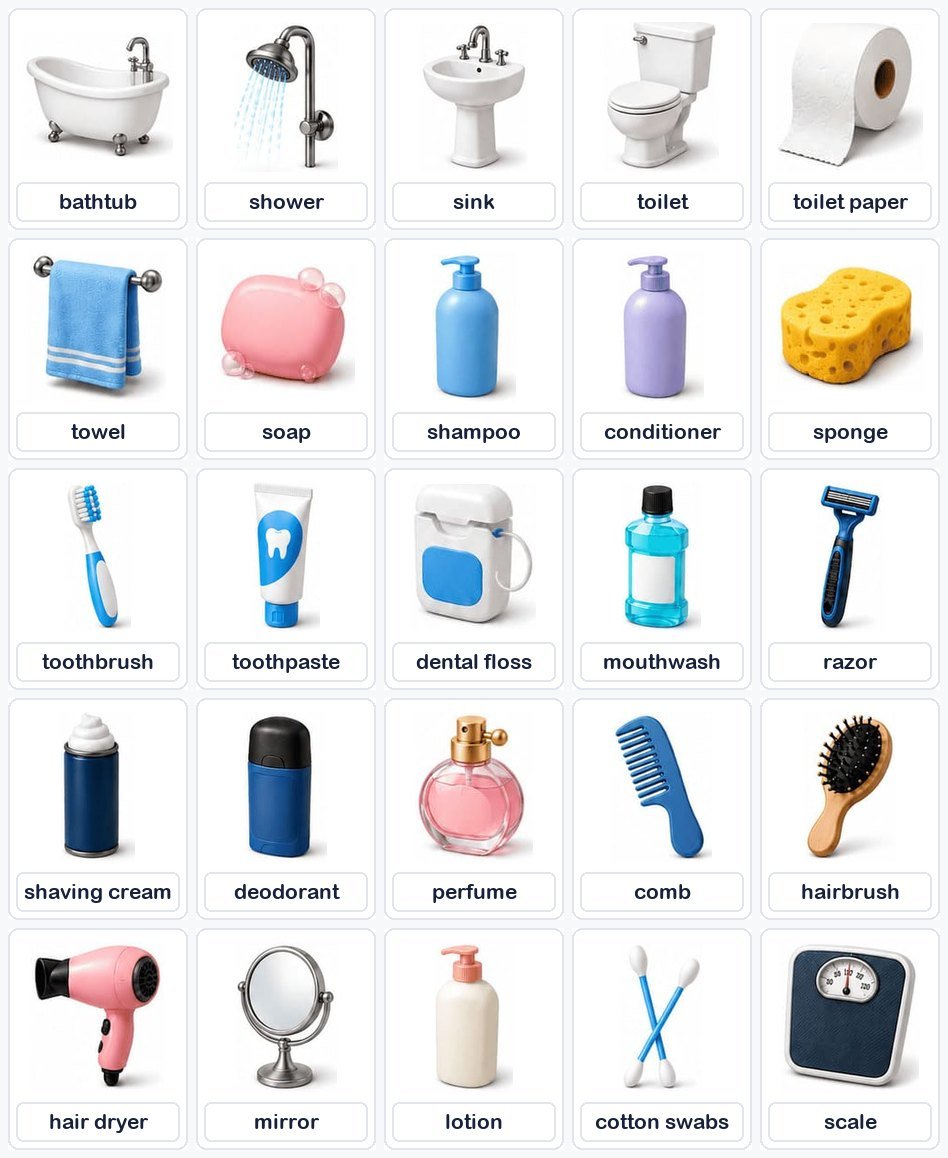
| Word | IPA | What it is |
|---|---|---|
| bathtub | /ˈbæθtʌb/ | You sit or lie in it to wash (British: bath) |
| shower | /ˈʃaʊər/ | Water falls from above to wash you |
| sink | /sɪŋk/ | Basin with a tap for washing your hands (British also: washbasin) |
| toilet | /ˈtɔɪlət/ | You use it, then flush |
| toilet paper | /ˈtɔɪlət ˌpeɪpər/ | Soft paper on a roll |
| towel | /ˈtaʊəl/ | Dries your body after washing |
| soap | /soʊp/ | Cleans your hands and body |
| shampoo | /ʃæmˈpuː/ | Washes your hair |
| conditioner | /kənˈdɪʃənər/ | Makes hair soft after shampoo |
| sponge | /spʌndʒ/ | Soft, holds water and soap |
| toothbrush | /ˈtuːθbrʌʃ/ | Brush for your teeth |
| toothpaste | /ˈtuːθpeɪst/ | Goes on the toothbrush |
| dental floss | /ˈdentl flɑːs/ | Thin string that cleans between teeth |
| mouthwash | /ˈmaʊθwɑːʃ/ | Liquid you rinse your mouth with |
| razor | /ˈreɪzər/ | For shaving hair |
| shaving cream | /ˈʃeɪvɪŋ kriːm/ | Foam you put on before shaving |
| deodorant | /diˈoʊdərənt/ | Stops body smell |
| perfume | /pərˈfjuːm/ | Liquid that makes you smell nice |
| comb | /koʊm/ | Tidies your hair: the b is silent |
| hairbrush | /ˈherbrʌʃ/ | Brush for your hair |
| hair dryer | /ˈher ˌdraɪər/ | Dries wet hair with warm air |
| mirror | /ˈmɪrər/ | You see yourself in it |
| lotion | /ˈloʊʃn/ | Cream that keeps skin soft |
| cotton swabs | /ˈkɑːtn swɑːbz/ | Small sticks with cotton ends (British: cotton buds) |
| scale | /skeɪl/ | Tells you how much you weigh (British: bathroom scales) |
Pronunciation traps in this group: comb has a silent b and rhymes with “home”. Towel has two syllables, /ˈtaʊəl/, and deodorant has four, /diˈoʊdərənt/. Toilet is /ˈtɔɪlət/: the second syllable is short and weak.
Many bathroom words come in pairs, which makes them easier to remember together: toothbrush and toothpaste, shampoo and conditioner, razor and shaving cream, soap and towel.
🍳 The third room: kitchen items
The kitchen is the busiest room in most homes, so it has a page of its own: kitchen items names in English lists 40 utensils, appliances, tableware words and cooking verbs with IPA. Together with this page, that is 95 household words across three rooms.
🧠 How to learn household words at home
A list is a good start, but the words stick when they are tied to real objects. Four habits that work for children and adults:
- One room at a time. Learn the bathroom words in the bathroom and the bedroom words in the bedroom, where every object is in front of you.
- Five objects a day. Pick five things you can touch, say each word out loud and use it in a short sentence: “Hang the towel on the rail.”
- Label for a week. Sticky notes on the mirror, the wardrobe and the lamp give you a reminder every time you walk past.
- Come back the next day. Review the same five words tomorrow and again a few days later. Our guide on why kids forget English words explains why spacing works.
For young children, household words are among the first English words worth learning, because every one has an object they can hold.
📱 Hear every word in your own home
Written IPA only goes so far: most learners need to hear a word before they can say it. Point PipWords at your own lamp and in about 2 seconds you get a card with a cutout photo of your lamp, the word, the IPA, tappable audio and the translation in your language (17 available). Because the picture is your object rather than a stock photo, the word has something to stick to.
After that, the app brings each word back on the right day, inside mini-games and boss battles rather than tests. It is free to download on iPhone and Android, has no ads, and only the cutout is ever shared, never the photo of your home.
Conclusion
Fifty-five words, two rooms, all within reach. Start with the ten in the quick list, learn five a day in the room where they live, and add the kitchen list when the bedroom and bathroom feel easy.
❓ FAQ: household items names in English
Q: What are household items in English?
A: Household items are the everyday objects in a home: furniture such as a bed or wardrobe, bedding such as a pillow or blanket, and bathroom things such as a towel, soap or toothbrush. Kitchen tools are household items too.
Q: What are 10 household items names in English?
A: Bed, pillow, lamp, alarm clock, wardrobe, towel, soap, toothbrush, toilet and mirror. They are ten objects most homes have and most people use every day.
Q: What is the difference between a blanket, a duvet and a throw?
A: A blanket is a warm cover for a bed. A duvet is a thick, soft cover filled with feathers or fibre, called a comforter in American English. A throw is a small blanket you put on a sofa or at the end of a bed.
Q: Is it a wardrobe, a closet or a dresser?
A: A wardrobe is a tall piece of furniture for hanging clothes. A closet is a small room or space built into the wall for the same job, the usual word in American English. A dresser is low and has drawers, called a chest of drawers in British English.
Q: Is it a bath or a bathtub?
A: Both are correct. Bathtub is the usual American word for the object, and British English normally says bath for both the object and the act of washing in it.
Q: How do you pronounce comb and towel?
A: Comb is /koʊm/: the b is silent, so it rhymes with home. Towel is /ˈtaʊəl/, two syllables, the first one like the word now.
Q: How can children learn household items names?
A: Start in one room. Point to five objects, say each word in a short sentence, and come back to the same five the next day. Real objects work better than pictures because the child can touch them.
🧑💻 About the Author
PipWords: the AI word camera
Written by the maker of PipWords, an independent studio run by a parent-developer. Word choices here follow the categories used inside the app, and IPA transcriptions are General American with British variants noted where they differ. PipWords runs on iPhone and Android in 12 interface languages with translations in 17, with no ads and no data selling.
A word we should add to this list? support@pipwords.site