30 English Words and Phrases for Bedtime
Bath, pyjamas, story and goodnight, with IPA pronunciation and the calm phrases that end a child’s day in English.
PipWords: AI Word Camera
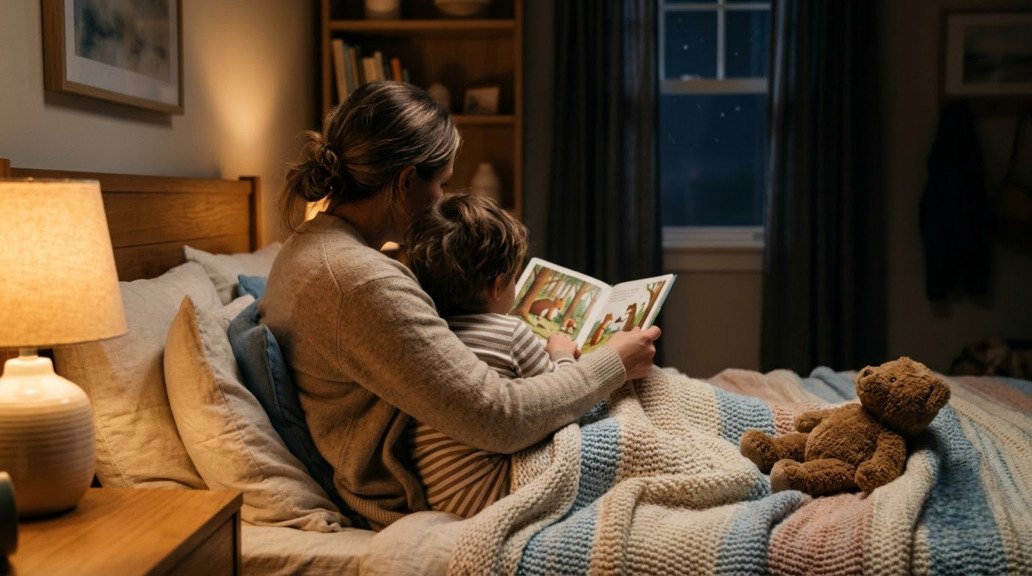
🌙 Bedtime words in English
A bedtime routine in English runs on eight phrases: “Time for bed”, “Take a bath”, “Put on your pyjamas”, “Brush your teeth”, “Get into bed”, “Let’s read a story”, “Turn off the light”, “Goodnight, sweet dreams”, plus about 22 objects: bath, towel, pyjamas, pillow, blanket, teddy bear, book, lamp and night light.
Bedtime is the gentlest place to use a second language, because the sentences are short, kind and identical every night. There is no pressure to answer and nothing to get wrong, which is exactly why children who resist English lessons will happily accept “Goodnight, sweet dreams”. This is the last part of the daily routine vocabulary guide.
🛁 22 bedtime objects with pronunciation
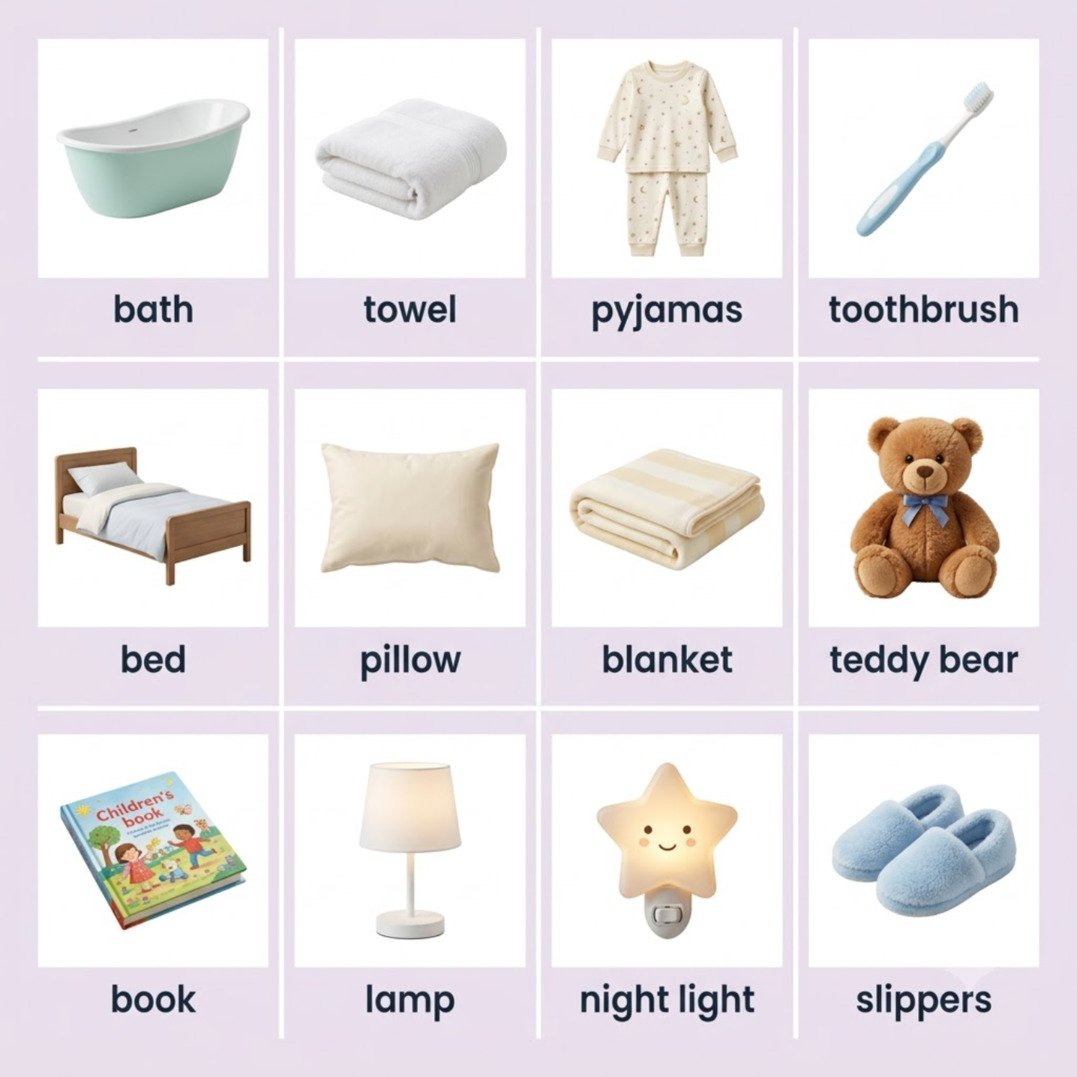
| Bath & teeth | IPA | In the bed | IPA |
|---|---|---|---|
| bath | /bæθ/ | bed | /bed/ |
| towel | /ˈtaʊəl/ | pillow | /ˈpɪloʊ/ |
| soap | /soʊp/ | blanket | /ˈblæŋkɪt/ |
| bubbles | /ˈbʌblz/ | sheet | /ʃiːt/ |
| toothbrush | /ˈtuːθbrʌʃ/ | duvet (UK) | /ˈduːveɪ/ |
| toothpaste | /ˈtuːθpeɪst/ | teddy bear | /ˈtedi ber/ |
| pyjamas | /pəˈdʒɑːməz/ | slippers | /ˈslɪpərz/ |
| Story & light | IPA | Out of the window | IPA |
|---|---|---|---|
| book | /bʊk/ | moon | /muːn/ |
| story | /ˈstɔːri/ | star | /stɑːr/ |
| lamp | /læmp/ | sky | /skaɪ/ |
| night light | /ˈnaɪt laɪt/ | dark | /dɑːrk/ |
| curtains | /ˈkɜːrtnz/ | dream | /driːm/ |
| clock | /klɑːk/ | night | /naɪt/ |
🗣️ The bedtime phrases, in order
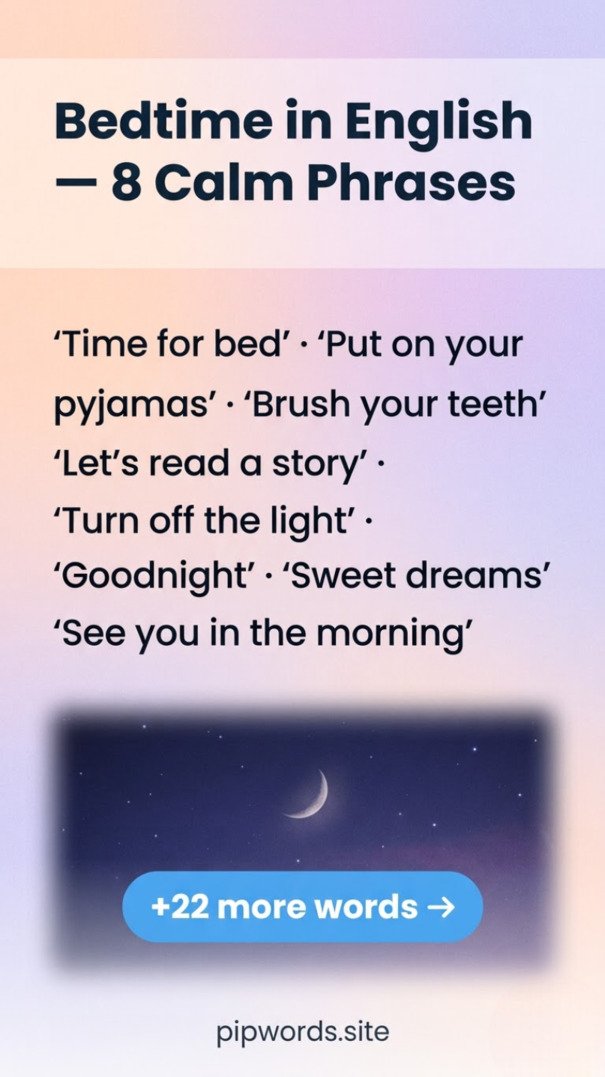
| # | Phrase | Meaning |
|---|---|---|
| 1 | It’s time for bed. | The evening is over. |
| 2 | Take a bath. / Have a bath. | American / British. |
| 3 | Dry yourself with the towel. | After the bath. |
| 4 | Put on your pyjamas. | Not “wear your pyjamas”. |
| 5 | Brush your teeth. | The last time today. |
| 6 | Get into bed. | Climb in under the blanket. |
| 7 | Let’s read a story. | The best part of the day. |
| 8 | Turn off the light. | Opposite: turn on the light. |
| 9 | Goodnight. Sweet dreams. | The standard goodnight. |
| 10 | See you in the morning. | A warm way to close the door. |
Two small points learners ask about: “Good night” is only a farewell, never a greeting: you cannot arrive somewhere in the evening and say “Good night” the way you say “Good morning”. And “sleep tight” is an old, affectionate way of saying sleep well, most often heard as “Good night, sleep tight.”
📖 Why the bedtime story is the best English of the day
A story does something no word list can: it puts words into a shape a child wants to follow. The vocabulary arrives inside a plot, the sentences repeat naturally, and nobody is asked to perform. Three practical rules:
- Choose a book below their level. Bedtime is for comfort, not challenge. A book they almost know by heart is doing more good than a hard one.
- Repeat the same story all week. Repetition at bedtime is a feature, not boredom, by night four the child will be finishing your sentences, which is real production.
- Do not stop to explain words. Point at the picture instead. Stopping to translate breaks the calm and turns the story into a lesson.
📱 A bedtime story made of your child’s own words
PipWords ends every day the same way this guide does. The words your child caught during the day (their teddy bear, their toothbrush, the moon out of the window) come back inside a short bedtime story, so the last thing they do in English is calm and story-shaped rather than a test.
Point the camera at any object and in about 2 seconds it becomes a word card with a cut-out photo, the English word, IPA, audio and a translation in one of 17 languages. Sessions are about three minutes with a clear ending: no endless feed at bedtime. Free on iPhone and Android, no ads.
The rest of the day: morning routine · getting dressed · mealtime · the whole day
❓ FAQ: bedtime English
Q: What do you say at bedtime in English?
A: The usual sequence is “It’s time for bed”, “Take a bath”, “Put on your pyjamas”, “Brush your teeth”, “Get into bed”, “Let’s read a story”, “Turn off the light” and “Goodnight, sweet dreams”.
Q: Is “good night” a greeting or a goodbye?
A: Only a goodbye. Unlike “good morning” or “good evening”, you cannot use “good night” to greet someone: it is said when leaving or going to sleep.
Q: What does “sleep tight” mean?
A: It is an affectionate way of saying sleep well, usually said together with goodnight: “Good night, sleep tight.” It is used mostly with children.
Q: Is it pyjamas or pajamas?
A: Both are correct: pyjamas is British spelling, pajamas is American. They are pronounced the same, /pəˈdʒɑːməz/, and are always plural: “a pair of pyjamas”.
Q: Should I read English stories if my accent is not perfect?
A: Yes. Children absorb the rhythm and the vocabulary long before the finer sounds, and a parent who reads is worth far more than a recording nobody plays. Use audio alongside if you want a native model.
Q: How long should a bedtime English routine be?
A: Five to ten minutes, including the story. Bedtime language should be calm and predictable; the same short phrases every night are what make it work.
🧑💻 About the Author
PipWords: the AI word camera
Written by the maker of PipWords, an independent studio run by a parent-developer. The bedtime story in the app exists because of this exact moment: the end of the day is when a child will accept a second language most easily, provided nothing about it feels like a test. IPA is General American, with British variants noted where they differ.
Questions: support@pipwords.site