25 English Words for Getting Dressed
Every item of clothing with IPA pronunciation, plus the put on / take off / wear rule and the “a pair of trousers” problem that confuses every learner.
PipWords: AI Word Camera
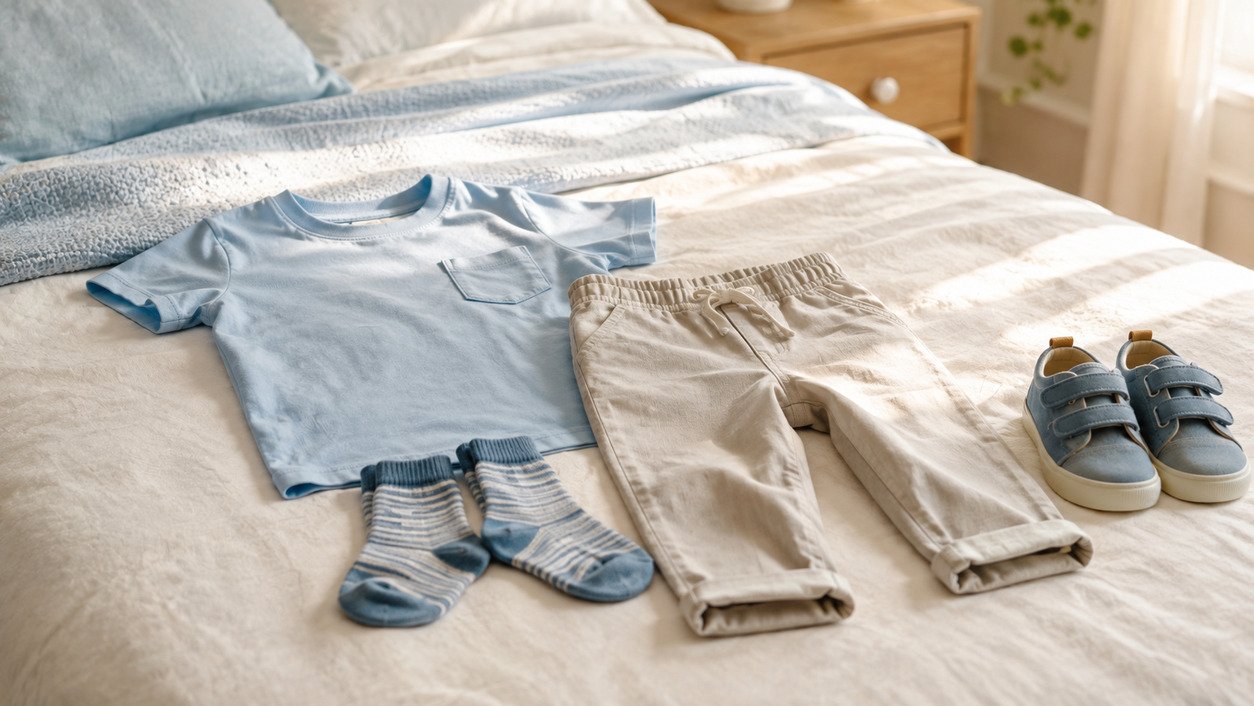
👕 Getting dressed in English
Getting dressed in English needs about eighteen clothing words: shirt, t-shirt, sweater, jacket, coat, trousers, shorts, dress, skirt, socks, shoes, boots, hat, scarf, gloves, belt, pyjamas, uniform, and five verbs: get dressed, put on, take off, zip up and button up.
This is a small list with two big grammar traps hiding inside it, and both are covered below: when to say put on instead of wear, and why trousers, shorts, glasses and scissors are always plural in English. Part of the full daily routine vocabulary guide.
🧥 18 clothes words with pronunciation
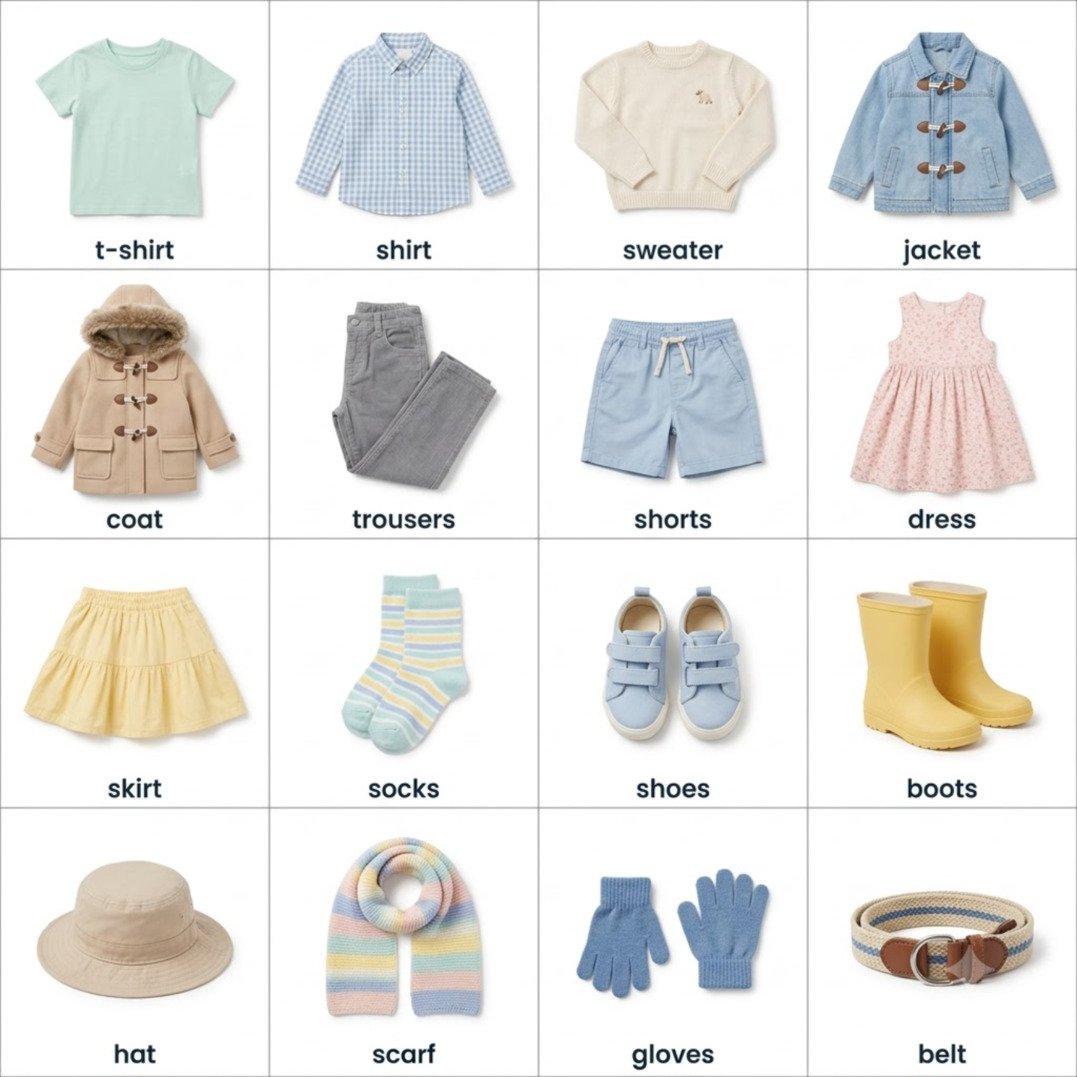
| Top half | IPA | Bottom half & feet | IPA |
|---|---|---|---|
| t-shirt | /ˈtiː ʃɜːrt/ | trousers (UK) | /ˈtraʊzərz/ |
| shirt | /ʃɜːrt/ | pants (US) | /pænts/ |
| sweater | /ˈswetər/ | shorts | /ʃɔːrts/ |
| jacket | /ˈdʒækɪt/ | skirt | /skɜːrt/ |
| coat | /koʊt/ | socks | /sɑːks/ |
| dress | /dres/ | shoes | /ʃuːz/ |
| pyjamas | /pəˈdʒɑːməz/ | boots | /buːts/ |
| Accessories | IPA | Parts of clothing | IPA |
|---|---|---|---|
| hat | /hæt/ | button | /ˈbʌtn/ |
| scarf | /skɑːrf/ | zip (UK) / zipper (US) | /zɪp/ · /ˈzɪpər/ |
| gloves | /ɡlʌvz/ | /ˈpɑːkɪt/ | |
| belt | /belt/ | sleeve | /sliːv/ |
US and UK differences to recognise: trousers = pants, sweater = jumper, sneakers = trainers, and in Britain “pants” means underwear, a difference that has embarrassed a great many learners.
🔑 “Put on” or “wear”? The rule in one line
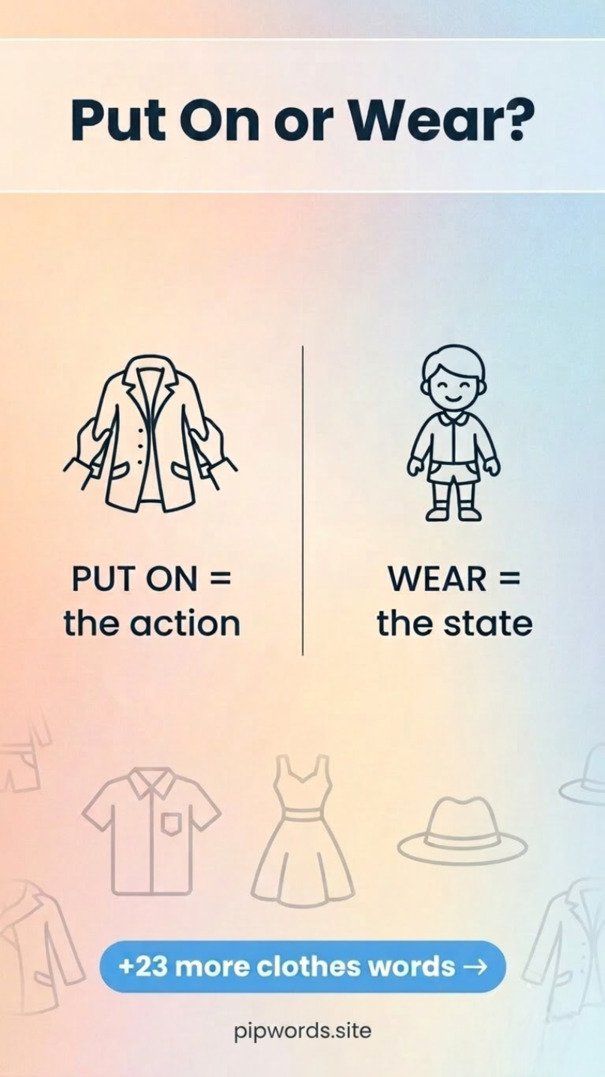
Put on is the action. Wear is the state. That single line fixes the most common clothing mistake in English.
| Verb | Meaning | Correct example |
|---|---|---|
| put on | the action of dressing (a few seconds) | Put on your coat, it’s cold. |
| wear | the state of having clothes on | She is wearing a red coat. |
| take off | the action of undressing | Take off your shoes at the door. |
| get dressed | put on all your clothes | Get dressed, we’re leaving. |
| get undressed | take off all your clothes | Get undressed for your bath. |
| change | swap one set of clothes for another | Change your clothes after football. |
| zip up / button up | close a zip or buttons | Zip up your jacket. |
| try on | test clothes before buying | Try on these shoes. |
❌ “Wear your shoes, we’re late.” → ✅ “Put on your shoes, we’re late.”
❌ “Today I put on a blue shirt.” → ✅ “Today I’m wearing a blue shirt.”
📝 Why “a trousers” is wrong
Some English clothes are made of two matching parts, so the word is always plural, even for one item. You cannot say “a trousers”; you say “a pair of trousers” or simply “trousers”.
| Always plural | Say this |
|---|---|
| trousers / pants | a pair of trousers · these trousers are new |
| shorts | a pair of shorts |
| jeans | a pair of jeans |
| pyjamas | a pair of pyjamas |
| glasses | a pair of glasses |
| socks · shoes · gloves | a pair of socks (two separate items) |
Note the difference: socks and shoes come in pairs of two separate objects, so “one sock” exists. Trousers and glasses are a single object with two parts, so “one trouser” does not exist at all.
📱 Catch what’s in the wardrobe
Clothes are the easiest thing in the house to photograph, and a child learns “jacket” faster from their own jacket than from a drawing. Point PipWords at each item as they get dressed, about 2 seconds each, and every one becomes a card with the word, IPA, audio and a translation in one of 17 languages. Free on iPhone and Android, no ads.
More in this series: morning routine · mealtime · bedtime · the whole day
❓ FAQ: getting dressed in English
Q: What is the difference between “put on” and “wear”?
A: Put on is the action of dressing: “Put on your coat.” Wear is the state of already having something on: “She is wearing a coat.” Learners very often use wear where English needs put on.
Q: Why can’t I say “a trousers”?
A: Trousers, shorts, jeans, pyjamas and glasses are single objects made of two matching parts, so English treats them as plural. Say “a pair of trousers” or just “trousers”.
Q: Is it trousers or pants?
A: Trousers is British English and pants is American English. Be careful: in British English “pants” means underwear.
Q: How do you say “get dressed” to a child?
A: “Get dressed, please” for the whole action, then name items one by one: “Put on your socks”, “Put on your shirt”, “Zip up your jacket”.
Q: Which clothes words should a child learn first?
A: The five items they put on every morning (shirt, trousers, socks, shoes and coat) plus the two verbs put on and take off. Everything else can wait.
🧑💻 About the Author
PipWords: the AI word camera
Written by the maker of PipWords, an independent studio run by a parent-developer. IPA is General American, with British variants shown where the two genuinely differ. PipWords runs on iPhone and Android in 12 interface languages with translations in 17, with no ads and no data selling.