30 English Words for Your Morning Routine
From the alarm clock to the school bag — with IPA pronunciation, the washing verbs, and sentences you can use tomorrow morning.
PipWords: AI Word Camera
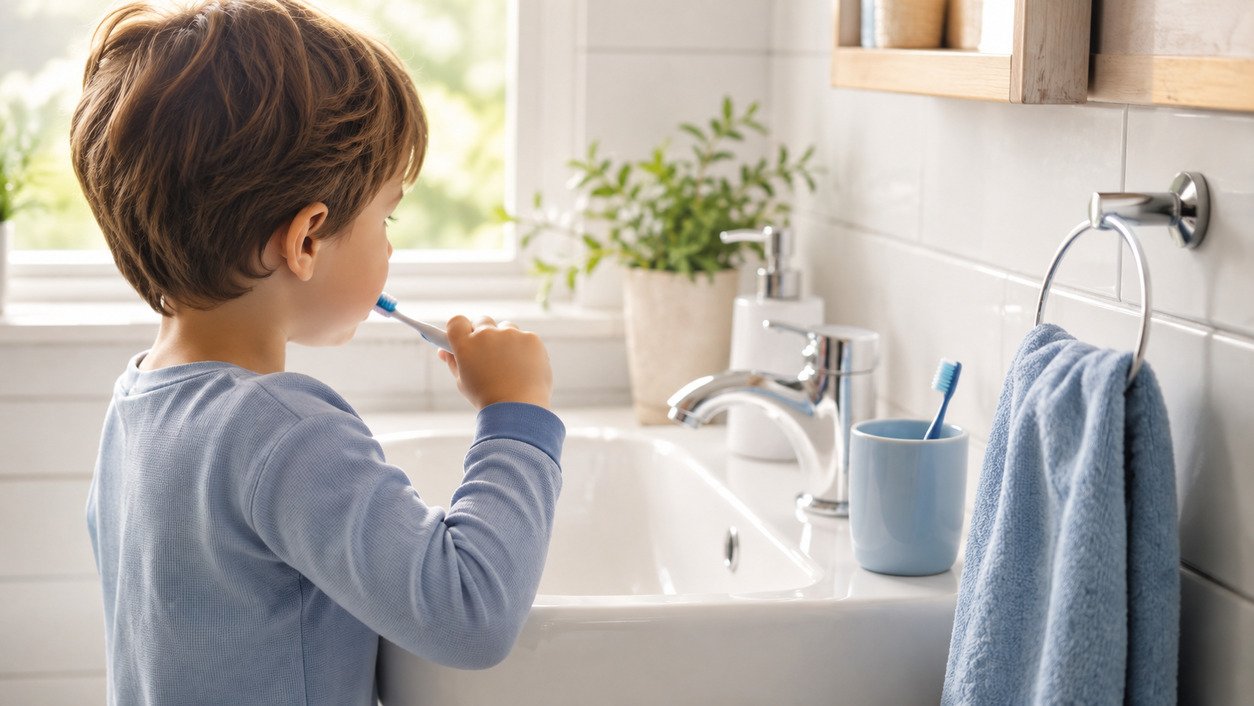
🌅 Morning routine words in English
A morning routine in English runs on six phrases — wake up, get up, make the bed, brush your teeth, get dressed and have breakfast — plus about 24 objects you touch on the way: alarm clock, curtains, toothbrush, towel, soap, uniform, backpack and shoes. All of them are below with pronunciation.
The morning is the best moment of the day to switch into English, because it never changes. The same objects, in the same order, at the same time — which means every word gets repeated about fourteen times a week without anyone planning a lesson. This guide is part of the full daily routine vocabulary guide.
🪥 24 morning objects with pronunciation
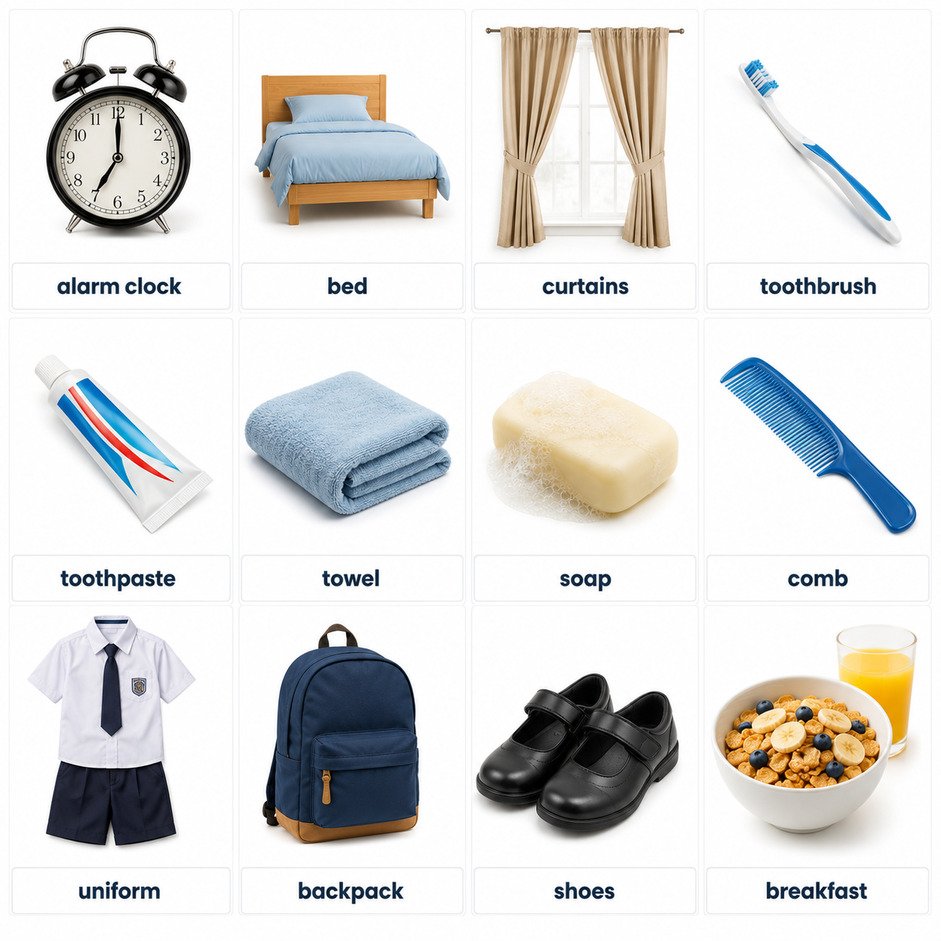
| In the bedroom | IPA | In the bathroom | IPA |
|---|---|---|---|
| alarm clock | /əˈlɑːrm klɑːk/ | toothbrush | /ˈtuːθbrʌʃ/ |
| bed | /bed/ | toothpaste | /ˈtuːθpeɪst/ |
| pillow | /ˈpɪloʊ/ | towel | /ˈtaʊəl/ |
| blanket | /ˈblæŋkɪt/ | soap | /soʊp/ |
| curtains | /ˈkɜːrtnz/ | shower | /ˈʃaʊər/ |
| window | /ˈwɪndoʊ/ | mirror | /ˈmɪrər/ |
| light | /laɪt/ | comb | /koʊm/ |
| slippers | /ˈslɪpərz/ | hairbrush | /ˈherbrʌʃ/ |
| Getting ready | IPA | Breakfast | IPA |
|---|---|---|---|
| clothes | /kloʊz/ | breakfast | /ˈbrekfəst/ |
| uniform | /ˈjuːnɪfɔːrm/ | cereal | /ˈsɪriəl/ |
| socks | /sɑːks/ | milk | /mɪlk/ |
| shoes | /ʃuːz/ | bread | /bred/ |
| backpack | /ˈbækpæk/ | butter | /ˈbʌtər/ |
| lunchbox | /ˈlʌntʃbɑːks/ | egg | /eɡ/ |
| keys | /kiːz/ | juice | /dʒuːs/ |
| coat | /koʊt/ | cup | /kʌp/ |
Two pronunciation traps: comb has a silent b — /koʊm/ — and clothes is said almost exactly like the word “close” (/kloʊz/), not “clo-thes”.
🔑 The morning verbs, in order
| # | Phrase | Say it like this |
|---|---|---|
| 1 | wake up | Wake up! It’s seven o’clock. |
| 2 | get up | Get up, please. Breakfast is ready. |
| 3 | open the curtains | Open the curtains — it’s sunny! |
| 4 | make the bed | Make your bed before school. |
| 5 | go to the bathroom | Go to the bathroom first. |
| 6 | wash your face | Wash your face with warm water. |
| 7 | brush your teeth | Brush your teeth for two minutes. |
| 8 | comb your hair | Comb your hair, please. |
| 9 | get dressed | Get dressed — we’re late! |
| 10 | have breakfast | Come and have breakfast. |
| 11 | pack your bag | Did you pack your bag? |
| 12 | put on your shoes | Put on your shoes and coat. |
Note that English says brush your teeth, not “wash your teeth”, and comb your hair, not “comb your hairs” — hair is uncountable when it means all the hair on your head.
⚡ Use it tomorrow morning
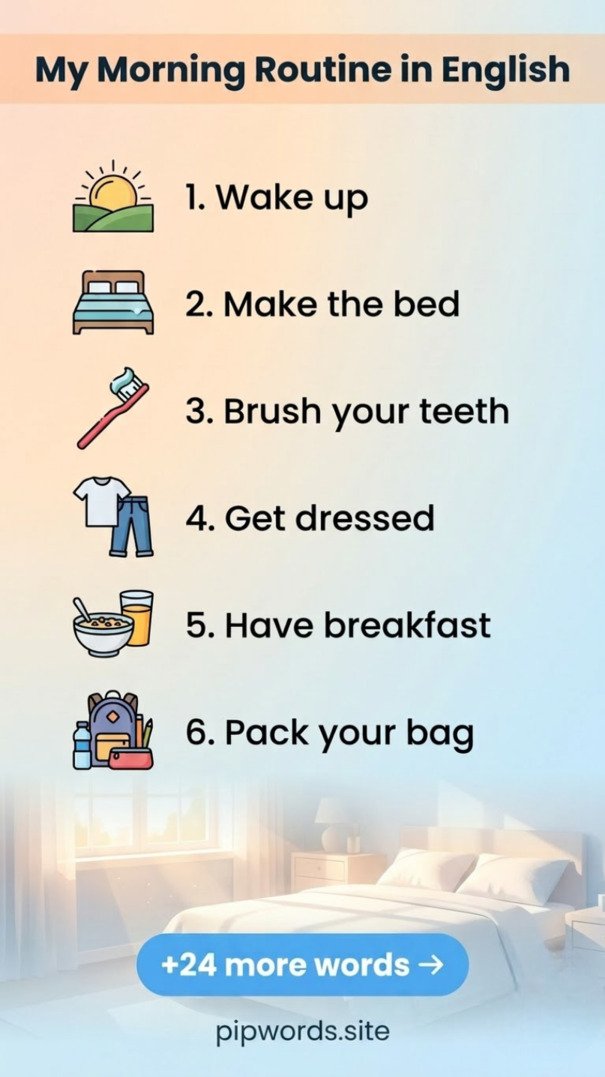
Do not try all twelve phrases at once. Pick three and say only those in English tomorrow — “Wake up”, “Brush your teeth”, “Put on your shoes” — and keep the rest of the morning in your own language. Add three more next week. Within a month the whole morning runs in English and nobody notices it happened.
If your own pronunciation is uncertain, say it anyway and check the audio afterwards. Children copy the rhythm of a sentence long before they copy individual sounds, and a parent who tries is a far better model than a parent who stays silent.
📱 Catch your own morning
Every object above is in your house right now. Point PipWords at your child’s own toothbrush, their backpack, the cereal box, and each becomes a word card in about 2 seconds — cut-out photo, English word, IPA, audio and a translation in one of 17 languages. Free on iPhone and Android, no ads.
Next in this series: getting dressed · mealtime · bedtime · the whole day
❓ FAQ: morning routine in English
Q: How do you describe your morning routine in English?
A: Use the present simple and the phrases in order: “I wake up at seven. I get up and make my bed. I brush my teeth and wash my face. I get dressed, have breakfast and pack my bag.”
Q: Is it “brush my teeth” or “wash my teeth”?
A: English says brush your teeth. “Wash your teeth” is a very common mistake for learners whose own language uses the verb for washing.
Q: What is the difference between wake up and get up?
A: Wake up means to stop sleeping; get up means to leave the bed. You can wake up at seven and get up at seven fifteen.
Q: How do you pronounce “clothes” and “comb”?
A: Clothes is /kloʊz/, almost the same as the word close. Comb is /koʊm/ with a silent b.
Q: Which morning words should a child learn first?
A: Start with three phrases used every single day — wake up, brush your teeth and put on your shoes — then add the objects those phrases involve.
🧑💻 About the Author
PipWords — the AI word camera
Written by the maker of PipWords, an independent studio run by a parent-developer. IPA is General American, with British variants noted where they differ. PipWords runs on iPhone and Android in 12 interface languages with translations in 17, with no ads and no data selling.